





Professional leak detection in Melbourne typically ranges from $250 to $600 for a standard call-out, but that can shift a lot once the leak is concealed, under concrete, or needs specialised equipment. In many homes, the question isn't whether the detection fee feels annoying. It's whether paying for it now is cheaper than letting the leak keep running.
The search for leak detection cost often begins when something already feels wrong. The water bill jumps. A wall starts bubbling. You notice a musty smell near the bathroom, or there's a damp patch on the ceiling that wasn't there last week. At that point, you're not shopping for an abstract service. You're trying to stop a problem from spreading through plaster, cabinetry, flooring, or the slab.
That's why a simple price list rarely helps. A hidden leak can keep wasting water for weeks or months, and in Australia, water-sector reporting has consistently treated non-revenue water and hidden losses as a major cost issue because one unaddressed leak can waste thousands of litres per day in the right conditions, especially in pressurised systems and ageing assets (Australian water loss reporting summary). For a homeowner, that means the leak detection cost is often the smaller number in the story.
If you're in Caroline Springs, Taylors Hill, or Melbourne's western suburbs, the goal is simple. Find the leak with as little damage, delay, and guesswork as possible. That's what this guide is about.
Table of Contents
- That Sinking Feeling A Hidden Leak and Its True Cost
- What Determines Your Leak Detection Quote
- Typical Leak Detection Costs in Melbourne
- Understanding Your Plumber's Pricing Model
- DIY Leak Detection vs Calling a Professional
- How to Prepare and Potentially Reduce Your Costs
- Frequently Asked Questions and Your Next Step
That Sinking Feeling A Hidden Leak and Its True Cost
It usually starts with something easy to dismiss. A patch on the ceiling. A musty smell near a wall. A hot spot on the floor. Then the water bill arrives, and the question changes from "What will leak detection cost?" to "How much is this already costing me?"
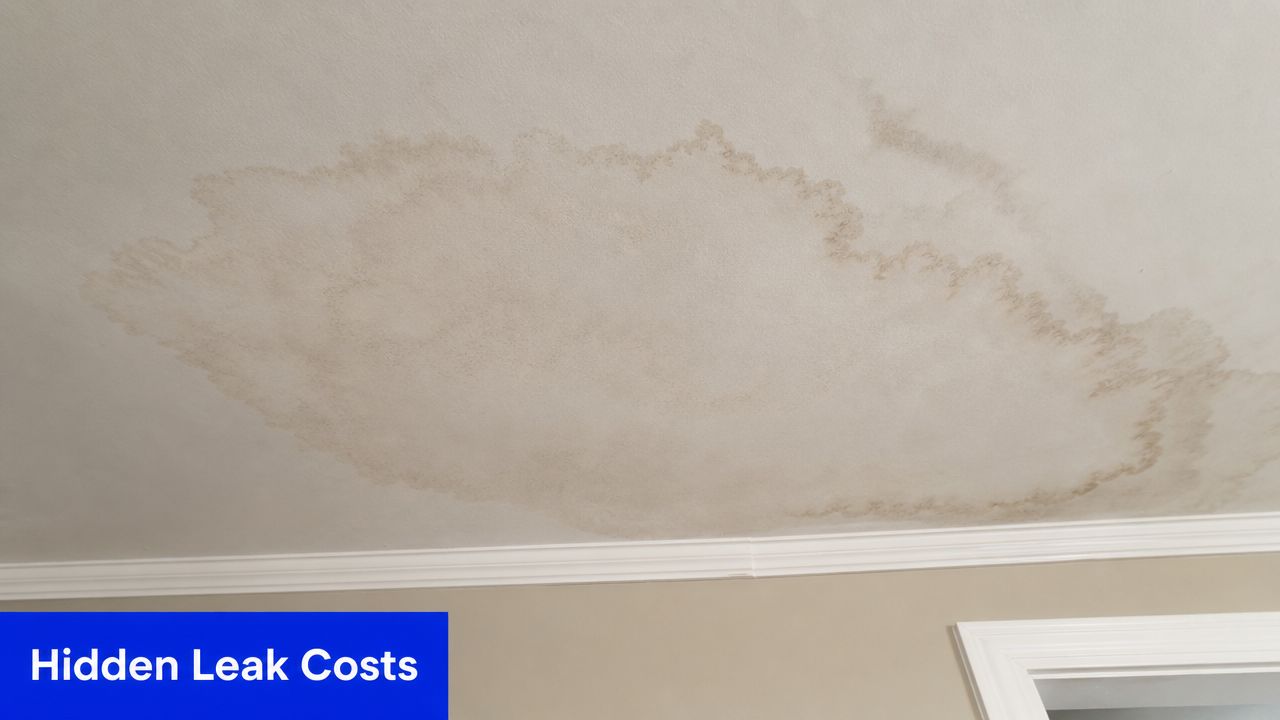
The first cost is rarely the biggest one
The inspection fee is often the smallest part of the problem.
A hidden leak can soak insulation, stain plaster, swell skirting boards, damage cabinetry, and leave damp areas where mould can take hold. In plenty of homes, the pipe fault is the simple part. Drying the area, repairing finishes, and dealing with secondary damage is what pushes the total bill up.
That is why leak detection should be judged against the cost of delay, not against doing nothing for a few more days. Waiting can mean more wasted water, a larger damaged area, and a repair that needs tiles lifted, plaster cut, or paving removed instead of a targeted fix.
Practical rule: If you can see signs of hidden water, the leak has usually been there longer than it looks.
Why the fee often makes sense
For a standard Melbourne booking, $250 to $600 is a fair starting expectation for professional leak detection. That fee usually covers time on site, diagnostic experience, and the right testing approach for the symptoms in front of the plumber.
Good leak detection is not just about finding water. It is about finding the source with as little unnecessary damage as possible. That matters if the leak could be under a slab, behind tiles, inside a wall cavity, or below paving, where blind guessing gets expensive fast.
In practical terms, the visit is an investment in narrowing the problem before anyone starts cutting into finished surfaces. A careful diagnosis can prevent a much larger repair bill and stop the water waste that keeps driving up your utility costs.
The key decision
Homeowners are often deciding between paying for detection now or risking a bigger job later. In my experience, the cheaper option on day one is often the more expensive option by the time the leak finally shows itself properly.
Paying to locate the issue early gives you a better shot at a smaller repair, less mess, and fewer surprises.
What Determines Your Leak Detection Quote
No two leak detection quotes are exactly alike because no two leaks behave the same way. Some jobs take one look and a quick pressure check. Others are more like detective work across multiple rooms, pipe runs, and possible water sources.
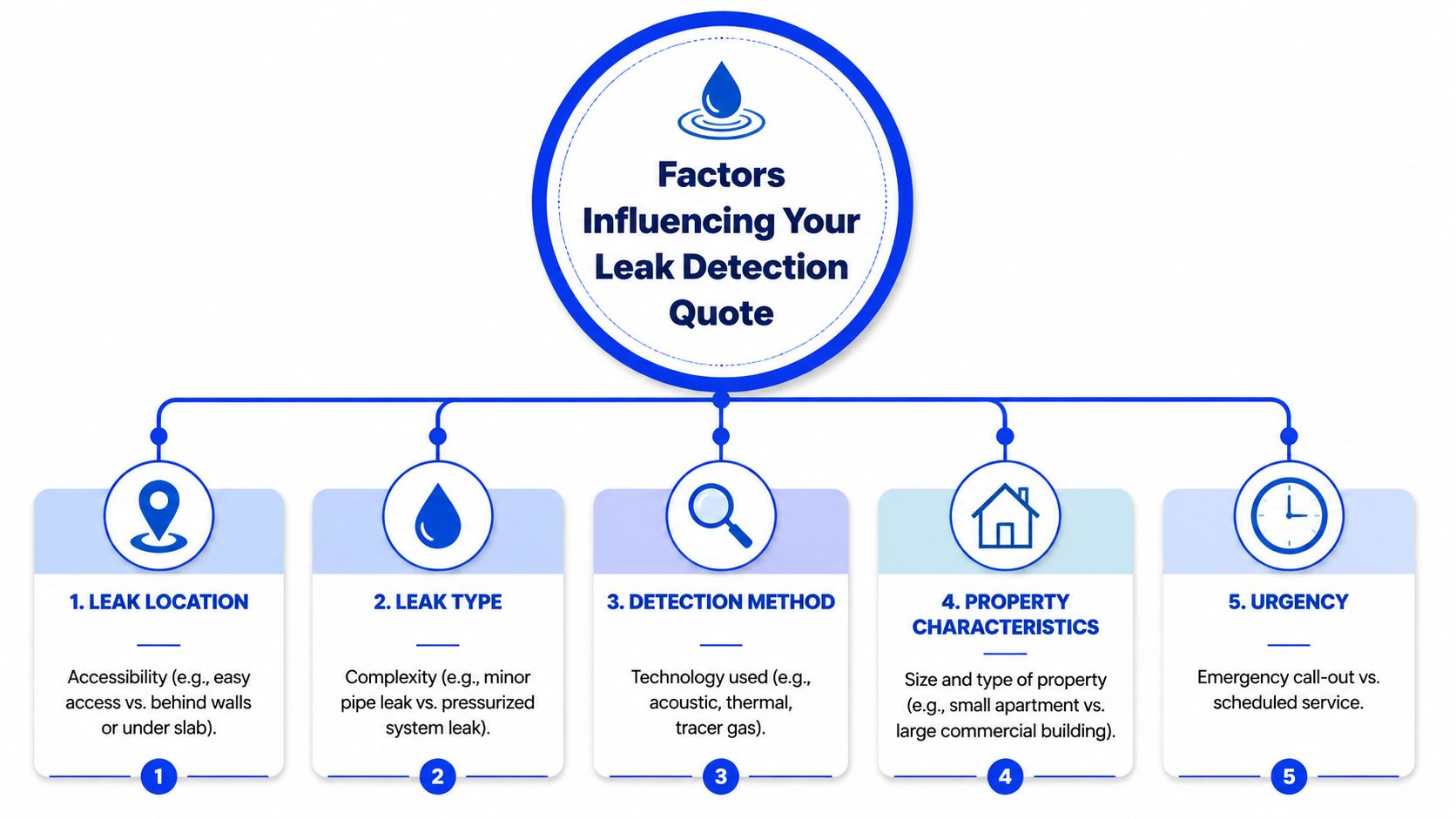
The leak itself changes the job
A dripping flexi hose under a vanity is one thing. A leak showing up as a stain in a ceiling below a second-storey bathroom is another. The quote usually moves based on:
- Location of the suspected leak. Under a sink is quick to inspect. Behind waterproofed walls, below paving, or under a concrete slab takes more work.
- Type of pipe and system. Hot water lines, cold water pressure lines, drainage leaks, roof plumbing leaks, and irrigation leaks all behave differently.
- How clear the symptoms are. A consistent damp patch helps. Intermittent moisture after showers or only when appliances run can take longer to isolate.
- Access conditions. Furniture, stored items, locked service areas, tight roof cavities, and tiled surfaces can all slow the job.
A plumber is pricing uncertainty as much as labour. The fewer clues the property gives, the more diagnostic steps are needed.
The detection method can save money or waste it
Good leak detection isn't about using the fanciest tool. It's about using the right one first. Acoustic gear is useful on pressurised lines. Thermal imaging can help trace temperature differences. Moisture meters can confirm spread. Tracer gas and pressure isolation testing can be the better choice when sound-based methods won't be reliable.
The cheapest quote on paper can become the expensive one if it leads to repeat visits or unnecessary wall and floor removal.
That trade-off matters because technology choice changes cost-effectiveness. In utility-scale work, satellite-based detection has been reported at $774 per leak found compared with $7,927 using a conventional CCAM approach, which shows how strongly method selection can affect the cost per successful find (satellite versus conventional leak finding comparison). Residential work is different, but the lesson carries across. Better first-pass diagnostics can reduce demolition, revisit time, and guesswork.
A quote often rises when the plumber expects any of these:
| Cost driver | Why it affects price |
|---|---|
| Concealed pipework | More time to isolate the source |
| Slab or underground leak | Specialised testing and confirmation needed |
| Multi-unit or strata property | Harder to identify which line or lot is affected |
| After-hours urgency | Emergency scheduling and rapid attendance |
| Previous failed attempts | More variables to rule out |
When a quote is higher than expected, it's usually because the job has more unknowns, not because the leak is “worse” in a dramatic sense.
Typical Leak Detection Costs in Melbourne
You're usually better off thinking in bands rather than expecting one universal fee. The leak detection cost depends on whether the plumber is confirming a likely source or starting from scratch with a concealed problem.
What a standard booking usually covers
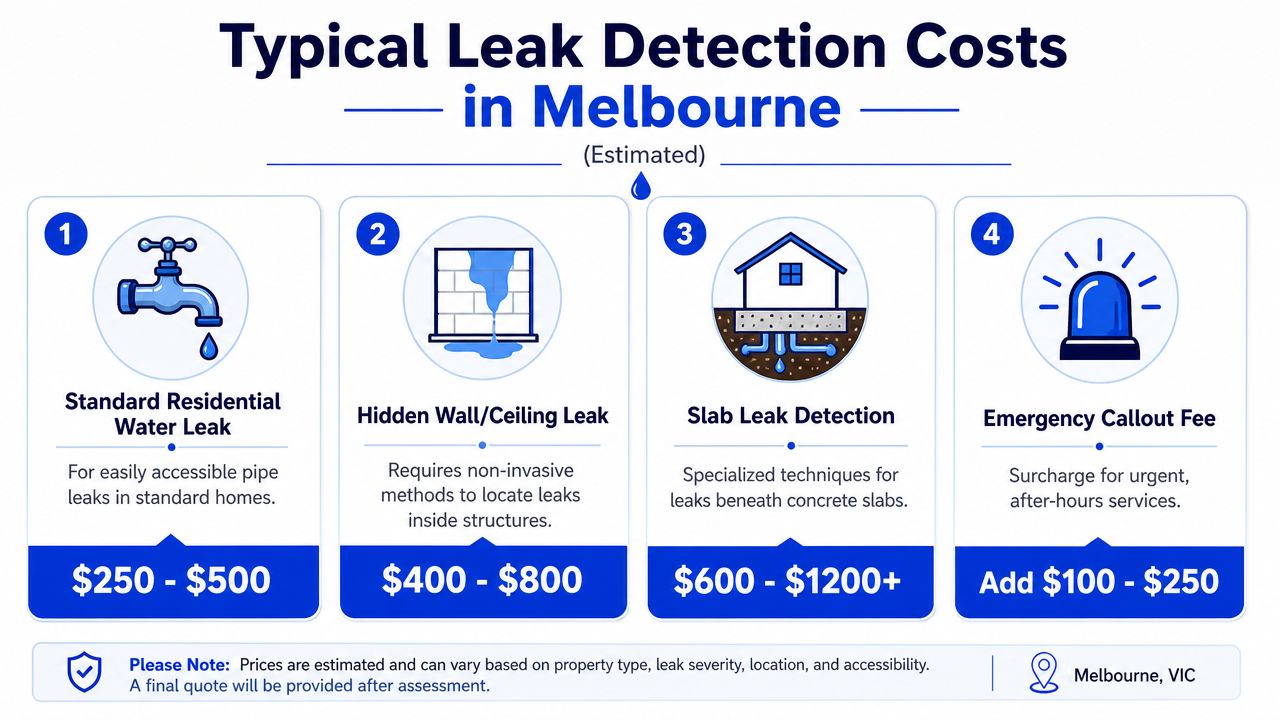
For many homes in Melbourne, a standard residential water leak sits in the $250 to $500 range. That generally suits accessible leaks or clear internal symptoms where the plumber can inspect likely points quickly and use non-invasive tools as needed.
A hidden wall or ceiling leak commonly falls into the $400 to $800 range. Those jobs often need a slower process to rule out shower recess issues, pressure line leaks, and overflow or drainage faults before any repair begins.
Here's a practical way to look at it:
| Scenario | Estimated cost range | Typical reason for the range |
|---|---|---|
| Standard residential water leak | $250 to $500 | Easier access and clearer symptoms |
| Hidden wall or ceiling leak | $400 to $800 | More testing, more elimination work |
| Slab leak detection | $600 to $1200+ | Specialist methods and confirmation |
| Emergency call-out surcharge | Add $100 to $250 | Urgent after-hours attendance |
If you want a closer look at the kinds of leak problems a plumber investigates, water leak services in Melbourne's west give a good overview of typical residential issues.
A short visual explanation can also help before you book a job:
Where the price starts to climb
The range gets wider once the leak is hard to reproduce or hard to reach. A slab leak might need staged testing across hot and cold lines, listening equipment, thermal confirmation, and careful interpretation of where the sound is travelling. Pool and spa leaks can also become time-heavy because there are more components to isolate.
What usually catches people out isn't the diagnostic time itself. It's the site conditions around it. Freshly renovated bathrooms, tiled shower bases, built-in cabinetry, and developed outdoor areas all raise the stakes. The more expensive the finishes, the more valuable accurate detection becomes before any opening-up starts.
If a leak is hidden, the best-value job is usually the one that finds it with the least disturbance, not the one with the lowest first number.
Understanding Your Plumber's Pricing Model
Two quotes can look different even when the plumbers expect a similar amount of work. That's because the pricing model changes how risk is shared between you and the contractor.
Flat fee
A flat-fee detection service gives you a set price for the diagnostic visit. Homeowners usually like this because it's predictable. If the plumber spends longer than expected, you're not watching the clock.
Flat fees work best when the service has a defined scope, such as investigating a standard concealed leak in a house with normal access. The downside is that some flat-fee jobs exclude specialist testing, extra report writing, or more than one leak source. You need to ask what the fee includes and what triggers extra charges.
Hourly rate
Hourly pricing can be fairer on unusual jobs. If the symptoms are vague, the building is large, or there have already been failed repair attempts, charging by time can make more sense than pretending the job is standard.
The risk for the homeowner is uncertainty. If access is poor or the leak is intermittent, the final invoice can stretch beyond what you expected. On the other hand, if the problem turns out to be obvious and easy to confirm, an hourly model can be cheaper than a packaged fee.
A good question to ask is whether there's a minimum charge, and what equipment use is included in that rate.
Inspection waived with repair
Some plumbers will reduce or waive the detection charge if you go ahead with the repair through the same company. That can be useful if you want one team to handle the job from diagnosis through to fix.
But don't assume “free detection” means cheaper overall. Sometimes the cost is folded into the repair price, or the offer only applies to straightforward jobs. You still want the repair scope written clearly, especially if wall, tile, excavation, or make-good work sits outside the plumbing price.
Here's a simple comparison:
| Pricing model | Best for | Watch for |
|---|---|---|
| Flat fee | Straightforward concealed leak investigation | Scope exclusions |
| Hourly rate | Complex or uncertain diagnostic work | Final total can grow |
| Waived with repair | Homeowners wanting one contractor for both stages | Detection cost may be absorbed elsewhere |
Ask for the trigger points before the job starts. The most common billing disputes happen when the homeowner thinks detection includes repair, or assumes repair includes reinstatement.
DIY Leak Detection vs Calling a Professional
Checking a few basics yourself is sensible. Trying to fully diagnose a hidden leak without the right gear usually isn't.
What you can reasonably check yourself
There are a handful of low-risk checks that help before you call:
- Watch the water meter. If all fixtures are off and the meter still moves, there may be a concealed leak on the property.
- Look for patterns. Does the damp patch get worse after showers, laundry use, or overnight when no one is using water?
- Check visible fittings. Toilets, taps, under-sink traps, flexi hoses, and hot water relief lines can sometimes reveal obvious issues.
- Take photos. If the stain, swelling, or moisture spread changes over time, that record helps.
Those checks give useful clues. They don't replace proper detection when the leak is hidden.
Where DIY usually goes wrong
The biggest DIY mistake is treating moisture as proof of the source. Water travels. A ceiling stain below a bathroom doesn't automatically mean the pipe above it has failed. It could be a shower waterproofing issue, a waste leak, a failed seal, condensation, or a pressure line elsewhere.
Another common problem is opening walls or removing tiles too early. Once you start demolition based on a guess, you can create more repair work without finding the fault.
For any plumbing issue connected with hot water lines, cylinders, valves, or system pressure, it also helps to understand how the home's hot water systems are serviced and repaired before assuming the leak is in a general water line.
Here's the practical comparison:
| Factor | DIY approach | Professional service |
|---|---|---|
| Upfront spend | Low or none | Service fee applies |
| Accuracy on hidden leaks | Limited | Higher due to tools and testing |
| Risk of property damage | Higher if you open surfaces blindly | Lower when diagnosis comes first |
| Time to isolate source | Can drag out | Usually faster |
| Best use case | Obvious visible leaks and early checks | Concealed, slab, wall, ceiling, or recurring leaks |
If the leak is visible and simple, DIY checks may be enough to explain the issue before a plumber arrives. If it's hidden, recurring, or tied to pressure changes, professional diagnosis is usually the cheaper path overall.
How to Prepare and Potentially Reduce Your Costs
You can't turn a slab leak into a cheap job with a checklist. But you can make the diagnostic visit quicker, cleaner, and more productive. That often helps with both cost and disruption.
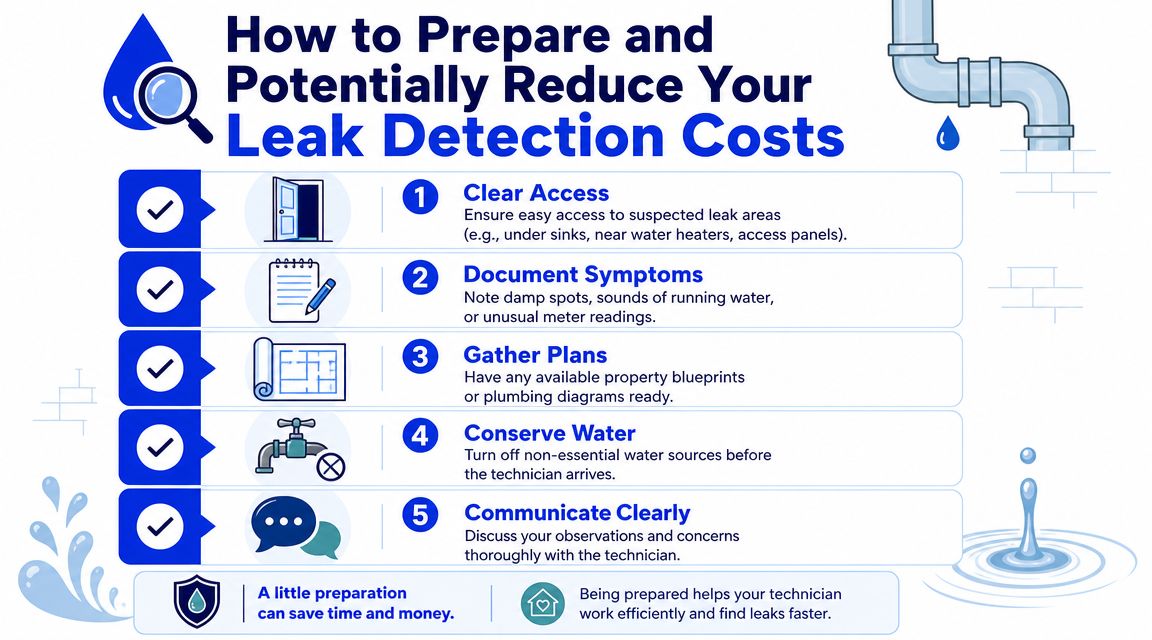
Before the plumber arrives
A little preparation saves time on site. Focus on giving the plumber clues and access.
- Clear suspected areas so vanities, access panels, hot water units, meter boxes, and exterior taps are easy to reach.
- Write down symptoms. Note when you first saw the damp patch, whether the bill changed, and what makes the issue better or worse.
- Keep photos on your phone if the leak appears intermittently or the stain changes at different times of day.
- Have any plans available if you've got renovation drawings, old plumbing notes, or strata maintenance records.
- Avoid using unnecessary fixtures right before the appointment if you've been asked to preserve test conditions.
Questions that help avoid wasted time
Not every homeowner asks the same questions, but these usually help:
- What does the quoted leak detection cost include?
- If you find the leak, can you repair it on the same visit?
- Will you need to cut, lift, or remove anything to confirm the source?
- Is the likely problem on a pressure line, waste line, fixture, or waterproofed area?
- What part of the work is plumbing, and what part would need a builder, tiler, or insurer?
One more point matters here. Research on water management has long taken the view that the savings from water no longer lost to leakage typically outweigh the combined detection-and-repair cost, which is why routine surveys and prompt repairs are treated as cost-saving maintenance rather than a one-off expense (guidance on leak detection as cost-saving maintenance). That's a useful way to think about a household leak too.
The fastest way to increase the total cost is to delay until the job becomes both a plumbing problem and a building repair problem.
One practical option for local homeowners is Total Plumbing & Hot Water Systems, which handles leak detection and repair work across Melbourne's western suburbs. The main point isn't the brand name. It's choosing a licensed plumber who can diagnose cleanly, explain the likely source, and tell you where plumbing ends and reinstatement begins.
Frequently Asked Questions and Your Next Step
Leaks worry homeowners for good reason. The detection fee is usually the smaller part of the total problem. The major expense starts when water keeps spreading into plaster, flooring, cabinetry, or the slab while the source stays hidden.
Common questions homeowners ask
Is leak detection covered by home insurance?
Sometimes. Cover usually depends on what caused the leak, whether the damage happened suddenly or over time, and what your policy says about locating the fault versus repairing the resulting damage. Keep photos, invoices, and the plumber's written findings, because insurers often ask for all three.
Can you find leaks under concrete without digging up everything first?
In many cases, yes. A plumber will usually start with non-invasive testing to narrow the area before any cutting or excavation is discussed. That can save a lot of unnecessary mess and reinstatement cost, but some leaks still need access work to confirm the exact point and complete the repair.
What happens after the leak is found?
It depends on the fault and where it sits. A simple issue at a tap, toilet, or exposed pipe may be repaired on the same visit. A leak under tiles, behind a wall, or under concrete often needs a separate repair scope, and sometimes another trade to restore surfaces after the plumbing work is done.
Should I wait if the leak seems minor?
Hidden leaks rarely stay minor. A small water loss can keep pushing up your bill while moisture spreads into nearby materials. Early detection is often the cheaper decision because it limits both plumbing work and building repairs.
Your next move if you suspect a leak
Treat the signs seriously. A damp wall, a ceiling mark, musty smells, unexplained water use, or a meter that moves when no water is running all point to a problem worth checking before it becomes more expensive.
Start by shutting off fixtures you can isolate, noting when you first saw the issue, and taking a few photos. Then book a licensed plumber to test the problem properly and explain whether you are paying for detection only, repair only, or both. If you need someone local, you can book a leak inspection with a Melbourne west plumbing team and get clear advice on the likely source, the next repair step, and what may fall outside the plumbing scope.
If you need a clear answer on leak detection cost, Total Plumbing & Hot Water Systems can inspect the problem, explain what's driving the price, and help you stop water loss before it turns into a much larger repair.