




A gas compliance certificate in Victoria typically costs $150 to $400, and it's a critical legal document for safety, especially when you're selling, renting, or installing new gas appliances. If you're in Melbourne's west and dealing with a new hot water system, a rental inspection, or a property sale, this certificate is often the difference between a straightforward job and a compliance headache.
You might be reading this because a real estate agent has asked for paperwork, a tenant has reported an issue with a heater, or you've just installed a new cooktop and want to know what comes next. These are everyday situations in suburbs like Caroline Springs, Taylors Hill, Truganina and Deer Park, where many homes rely on gas for hot water, cooking and heating.
The confusion usually starts with the same few questions. Do I need a gas compliance certificate? When is it mandatory in Victoria? What does the fitter check? What happens if something doesn't pass?
For homeowners, landlords and sellers, the important point is simple. A gas compliance certificate isn't just paperwork. It confirms that gas work has been inspected by a licensed gas fitter and that the installation meets the relevant safety requirements. That matters for your family, your tenant, your insurer and anyone buying your property.
Table of Contents
- Introduction
- What Is a Gas Compliance Certificate and Why Is It Vital
- When a Certificate Is Mandatory in Victoria
- The Gas Certificate Process and Costs in Melbourne
- Common Gas Compliance Questions Answered
- Ensure Your Melbourne West Home Is Compliant with Total Plumbing
Introduction
If you're about to lease out a unit in Caroline Springs, replace a failed storage hot water service in Taylors Hill, or get your home ready for sale, gas compliance tends to become urgent very quickly. It's often not considered until a plumber, agent, or conveyancer asks for documentation.
In Victorian homes, gas systems are common, but they're not forgiving when something has been installed badly, altered without proper testing, or left unchecked for too long. A loose joint, poor ventilation around an appliance, or an issue with appliance operation can turn a routine job into a safety risk.
That's why the gas compliance certificate matters. It's the formal record that licensed gas work has been checked and completed to the required standard. In practice, it protects the people living in the property and gives the owner evidence that the work was done properly.
Practical rule: If gas work has been installed, replaced, altered or inspected as part of a rental obligation, get the paperwork sorted straight away and keep it where you can find it.
Around Melbourne's western suburbs, I see the same pattern often. People assume the installation itself is the finish line. It isn't. The finish line is safe work, tested work, and the right certificate in your records.
What Is a Gas Compliance Certificate and Why Is It Vital
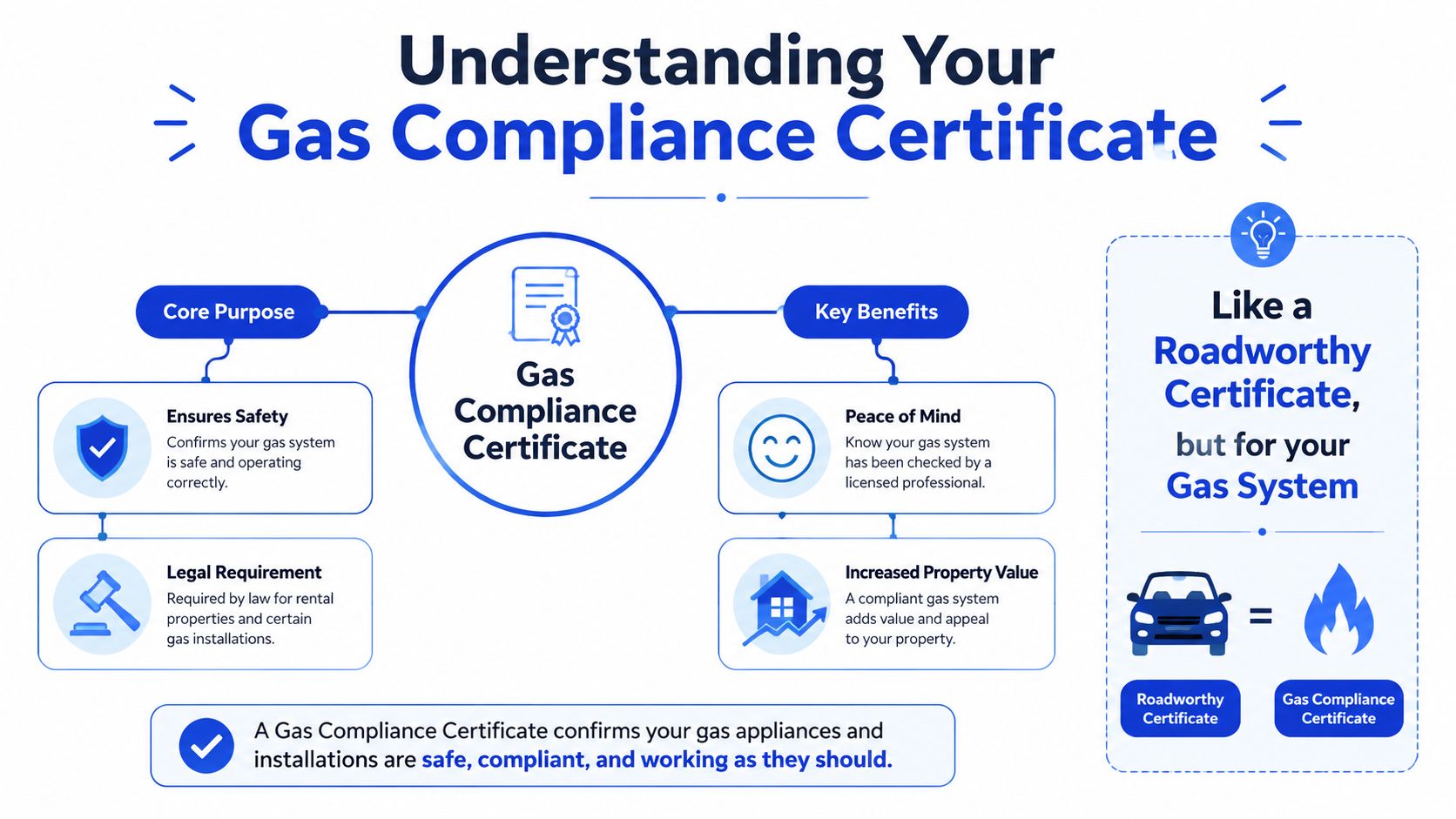
A gas compliance certificate is the formal record that a licensed gas fitter has completed gas work or a required gas safety check and confirmed it meets the relevant standard. In practical terms, it is the document that shows the job was tested, not just installed.
In Melbourne's western suburbs, I usually see this come up after a hot water replacement, a cooker swap during a kitchen renovation, or new gas pipework added for an extension. The owner often assumes the appliance is in and the job is finished. It is only finished when the testing is done properly and the paperwork is issued.
In Victoria, that certificate matters because gas work has to be carried out and documented correctly. It confirms the installer has checked key safety points such as gas tightness, operating pressure, appliance function and, where relevant, ventilation and flueing. For any homeowner organising gas fitting and gas lines in Melbourne, the certificate should be treated as part of the job scope from the start.
For owners, the value is straightforward. You have proof of who did the work, what was done, and that it was signed off by a licensed person.
For occupants, it is about risk reduction. Gas leaks, poor combustion, carbon monoxide issues and incorrect appliance setup are not always obvious on the day of installation.
Why homeowners in Melbourne should care
Homes in places like St Albans, Sunshine, Werribee and Deer Park often have a mix of old and newer gas work. A wall furnace may have been removed years ago. A freestanding cooker may have been replaced with a cooktop and underbench oven. A storage hot water service may have been changed to continuous flow. Each of those changes can affect pipe sizing, location, clearances, ventilation or the way the whole system performs.
That broader system check is where the certificate earns its place. A licensed fitter is not only looking at the new appliance. We are checking whether the connected work is suitable and safe for the way the home is set up now.
A proper certificate helps with:
- Occupant safety, by identifying leaks, unsafe operation, ventilation problems and installation defects
- Owner protection, because there is a clear record that licensed work was completed and signed off
- Property records, when an agent, landlord, buyer or insurer asks for evidence of compliant gas work
I tell homeowners the same thing across Melbourne's west. If gas work has been installed, altered or replaced, get the certificate issued and keep a copy with your house records. It saves arguments later and confirms the work was checked properly.
When a Certificate Is Mandatory in Victoria
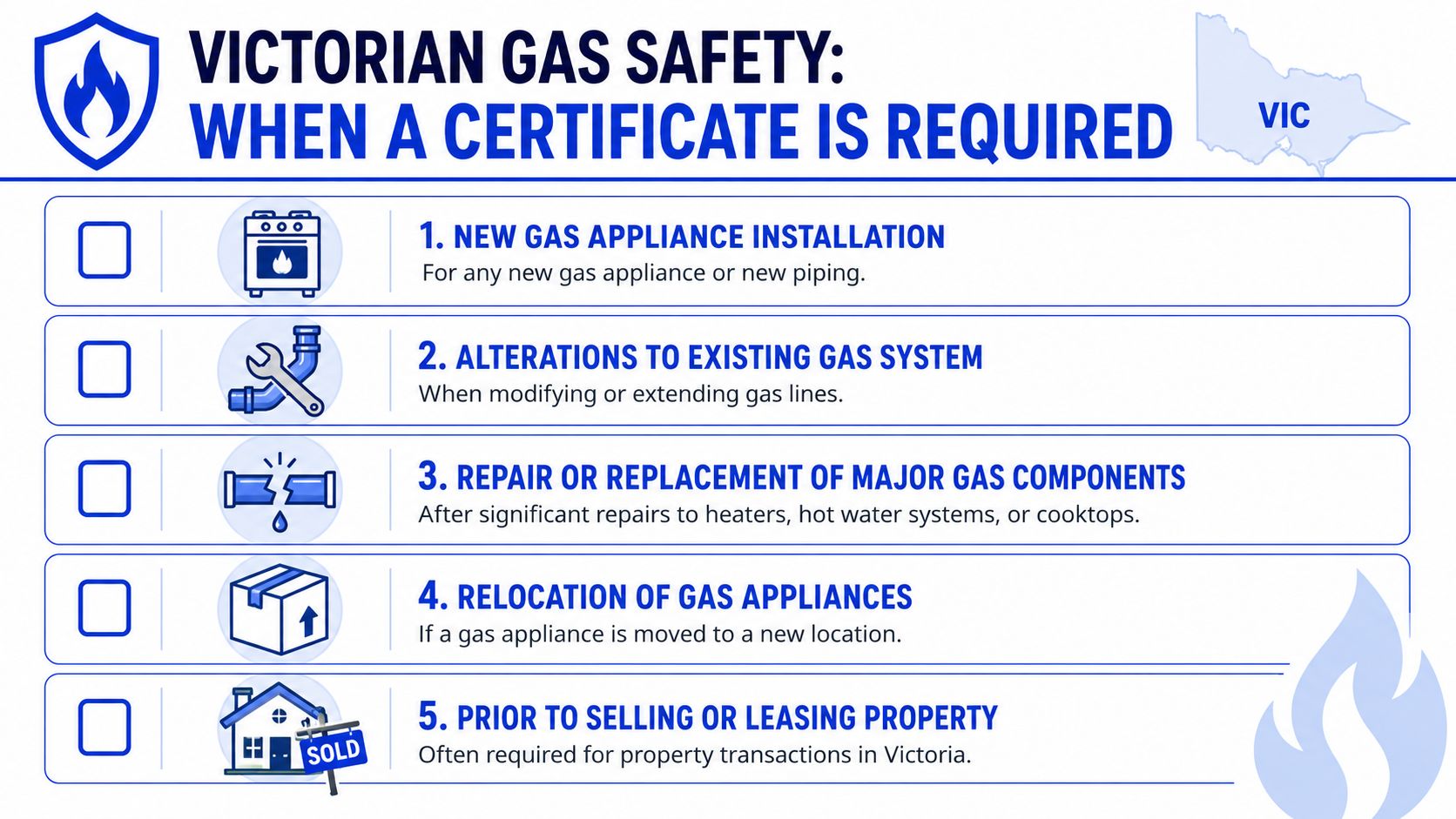
A common callout in Melbourne's west goes like this. The kitchen has just been renovated in Yarraville or Caroline Springs, the new cooktop is in, the cabinetry looks finished, and the owner assumes the gas side is done because the appliance is working. In Victoria, that is not the test. If gas installation work has been carried out, the work must be completed by a licensed gas fitter and certified where the law requires it.
Rental properties
Rental homes are the clearest example. Landlords in Victoria have specific gas safety duties, and rental properties need periodic gas safety checks carried out by a qualified person. In practice, these inspections often pick up issues in older homes and units across Sunshine, St Albans and Werribee, especially around ageing heaters, poor ventilation, worn connections and appliance faults that have been left untouched between tenancies.
For landlords, the paperwork matters as much as the inspection itself. If gas work has been installed, replaced or altered, the certificate is the formal record that the job was done by a licensed person and tested properly.
New appliances and altered gas work
Homeowners usually run into certificate requirements during upgrades or renovations. Replacing a hot water service, installing a new cooktop, relocating a gas point, converting an old heater setup, or extending pipework for an outdoor kitchen can all trigger the need for a certificate.
The key issue is the work performed, not how simple the job looked from the outside.
A straight swap is not always straightforward. Changing appliance type, burner load, location, flue arrangement or pipe run can affect pressure, ventilation, clearances and the suitability of the existing line. That is why licensed fitters test the installation and issue the certificate where required under Victorian rules.
Selling and owner-occupied homes
Owner-occupied homes are treated differently from rentals. There is no general recurring inspection rule in the same way, but certificates still matter whenever gas fitting work has been carried out. They also become important when a property is being sold, because missing records often raise questions late in the campaign or during conveyancing.
In the western suburbs, I see this regularly in homes that have been updated in stages over many years. An old wall furnace gets removed. A freestanding cooker becomes a separate oven and cooktop. A storage unit is replaced with continuous flow. The finishes look new, but the gas history is patchy.
These are the situations where homeowners should check their records and arrange a proper inspection if needed:
| Situation | Why it matters |
|---|---|
| You are preparing to sell | Agents and buyers often ask for evidence that gas work was done correctly |
| You have bought an older home | Past alterations may not be obvious from a visual check |
| You have renovated a kitchen, laundry or extension | Appliance changes and pipework alterations often require certification |
| You have concerns about smell, performance or shutdowns | Gas faults need licensed testing, not assumptions |
A renovated room does not confirm compliant gas work. The certificate does.
The Gas Certificate Process and Costs in Melbourne
What happens on the day
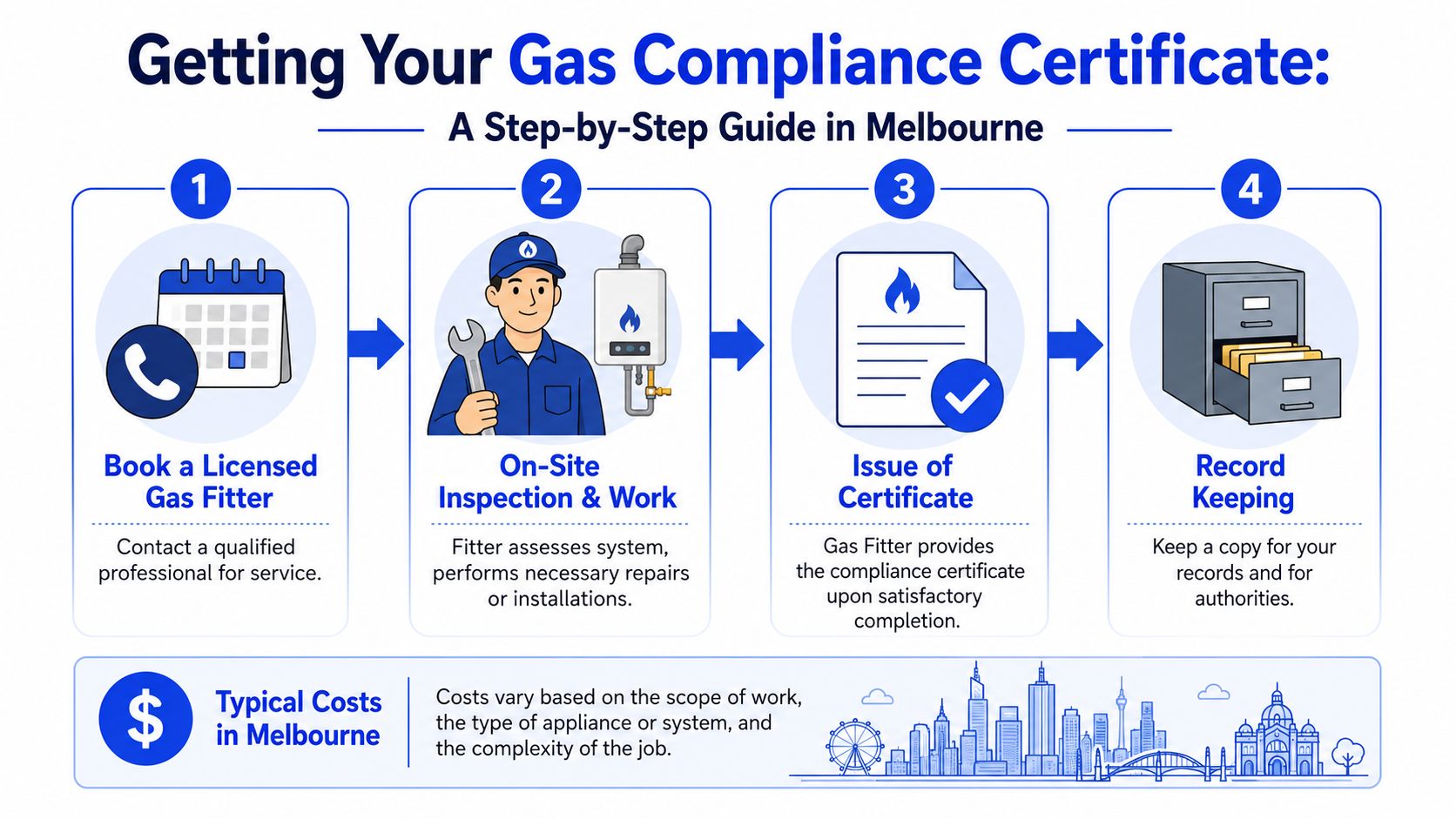
A typical call in Melbourne's western suburbs goes like this. The hot water service has been replaced in Sunshine, a cooker has been moved during a kitchen renovation in Werribee, or an old heater in Footscray has started acting up after years of piecemeal changes. The work looks finished, but the job is not complete until the gas installation has been tested properly and the paperwork has been issued where required.
On site, a licensed gas fitter checks the part of the installation that has been installed, altered, serviced or replaced. In practice, that means testing the pipework, checking for leaks, confirming the appliance is operating correctly, and making sure ventilation and clearances meet the applicable requirements. In older brick veneer homes and weatherboards across the west, access can be the issue. Tight roof spaces, boxed-in pipe runs and old appliance locations often add time because the fitter has to verify what is present, not guess from the finish work.
For Victorian record-keeping, the licensed person who issues the certificate must provide a copy to the customer or occupier and retain records. Energy Safe Victoria sets out those obligations on its gas compliance certificate and application requirements page.
The on-site process usually includes:
- Pressure testing of the relevant gas line.
- Leak testing at joints, valves, regulators and appliance connections.
- Appliance checks to confirm safe operation after installation or alteration.
- Ventilation and clearance checks where the appliance type requires them.
- Certificate paperwork once the work passes and can legally be signed off.
If the job includes a replacement unit, the cleanest approach is to handle the installation and certification together. Homeowners comparing systems before booking often start with the practical options for gas and electric hot water systems.
What it usually costs
There is no single flat price across Melbourne because the certificate is tied to the work, the testing involved and the condition of the existing installation. A straightforward appliance replacement with clear access is usually at the lower end. A renovated house with multiple appliances, unclear old pipework or defects from earlier work will cost more because the fitter has more to test and, in some cases, more to rectify before sign-off.
In the western suburbs, the biggest cost drivers are usually:
- How many appliances are connected
- Whether the work is new, altered or a like-for-like replacement
- Access to the meter, isolation valves, pipework and appliance position
- The age and condition of the existing gas line
- Any defects that must be repaired before the certificate can be issued
That last point catches people out. A cheap booking price can turn into a more expensive job if the fitter finds an undersized connection, poor ventilation, a leaking bayonet point or earlier unlicensed work that has to be corrected first.
What happens if something fails
A certificate is only issued once the work complies. If the fitter finds a defect, the problem has to be fixed and the installation retested. Sometimes that is a small repair. In other homes, especially older properties that have been updated room by room, it can mean replacing sections of pipe, correcting the appliance connection method, or addressing ventilation problems before the job can be signed off.
No licensed gas fitter should issue a certificate to help a sale along or tidy up paperwork after the fact. In Victoria, the person signing takes responsibility for that work. That is why a proper inspection matters, particularly in homes where the gas history is incomplete.
Common Gas Compliance Questions Answered
How long does a gas compliance certificate last
This is one of the biggest points of confusion. The certificate itself doesn't work like milk in the fridge with a simple expiry date stamped on it. The practical issue is whether the situation requires a fresh inspection cycle.
For rental properties, the ongoing obligation is the annual safety check covered earlier. For owner-occupied homes, regular checks are recommended rather than mandated on the same cycle. For installation work, the certificate records that the job was completed compliantly at that point in time.
Can I do it myself
No. You can't legally replace a licensed gas fitter with a DIY check, and a general handyman can't issue a valid gas compliance certificate either.
That's not just a paperwork rule. Gas compliance involves testing, verification and formal responsibility for the safety of the installation. If there's a leak, ventilation issue or appliance fault, the person signing the certificate is taking responsibility for that assessment.
What about portable appliances and outdoor BBQs
This depends on what is permanently installed and connected. A built-in outdoor kitchen with fixed gas pipework is a different compliance situation from a portable BBQ bottle setup. The key question is whether the work forms part of the property's installed gas system.
If it's fixed, connected and part of the property, treat it seriously and have a licensed gas fitter assess it. If you're unsure, ask before assuming it's outside the rules.
What if the property doesn't pass
The answer is straightforward. The defects need to be rectified before compliant sign-off can happen.
Common problems include gas leaks, ventilation shortcomings, appliance performance faults, or issues created by earlier unlicensed work. In a lot of western suburbs homes, especially renovated properties, I've seen compliance issues caused by cabinet changes, boxed-in services, and appliances installed without enough thought about clearances and airflow.
If a fitter finds a problem, that's good news early. It's far better than finding out after a tenant complaint, a failed sale inspection or a gas incident.
Ensure Your Melbourne West Home Is Compliant with Total Plumbing
If you own, manage or are selling a home in Melbourne's west, gas compliance needs to be handled properly the first time. That means licensed work, clear advice, proper testing and paperwork you can rely on.
For homeowners in Caroline Springs, Taylors Hill and surrounding suburbs, local knowledge makes a difference. Western suburbs properties range from newer estates with modern continuous-flow units to older homes with legacy heaters, altered kitchens and gas lines that have been modified more than once. The approach has to suit the property in front of you.

Total Plumbing & Hot Water Systems in Caroline Springs is a fully licensed, second-generation plumbing company with 20+ years' experience serving Melbourne's western suburbs. The team handles gas fitting, hot water work, emergency plumbing and compliance-focused repairs with clear communication, upfront pricing and guaranteed workmanship.
If you need a gas compliance certificate, a new gas appliance installed, or a safety issue checked by someone who knows local homes and local requirements, speak to a licensed team that does this work every day.
Need help with a gas compliance certificate in Melbourne's west? Contact Total Plumbing & Hot Water Systems on 0418 550 372 for practical advice, fast booking, and compliant gas fitting work you can trust.