



The shower's gone cold, the kids are banging on the bathroom door, and you're standing there in a towel trying to work out whether the hot water service not working is a quick fix or the start of a bigger headache. In Melbourne's western suburbs, that's not a minor inconvenience, it can knock out the morning routine, the dishes, and the whole house before school and work even start. The sensible way to handle it is to triage it properly, separate a whole-home supply issue from a heater fault, then stop as soon as the job crosses into gas, electrical, or compliance territory.
Hot water is treated as part of basic services in Australian housing standards, not as a luxury add-on. International water monitoring also shows the scale of the wider infrastructure expectation, with 5.82 billion people using safely managed drinking-water services in 2022 and 2.2 billion still lacking safely managed water overall, which is why a failed hot-water system can leave a home feeling partially non-functional rather than merely uncomfortable (UNICEF water and sanitation data). In practice, that's how homeowners in Caroline Springs, Taylors Hill, Deer Park, and Sunshine tend to treat it too, urgent, not optional.
Table of Contents
- When the Hot Water Stops on a Cold Melbourne Morning
- Safety First Before You Touch Anything
- Diagnosing the Most Common Causes by System Type
- Safe DIY Fixes Worth Trying Before You Call
- The Causes Most DIY Checklists Miss
- When to Call a Professional and What to Expect
- Your Pre-Call Checklist and Key Takeaways
When the Hot Water Stops on a Cold Melbourne Morning
At 6am in Caroline Springs, nobody wants a lecture about plumbing theory. They want the shower to run hot, the kettle to boil, and the day to get moving without a scramble. When the system's cold, the first mistake is assuming every no-hot-water complaint means the same thing. It doesn't.
A Triton that's gone cold can point to a heater fault, but it can just as easily be a supply issue, a valve that's been bumped closed, or a temperature-control problem at the outlet. The operational impact is why hot-water loss is treated as urgent in the field. A useful scale reference comes from New York public housing, where hot-water outages were the second-most common utility disruption between 2020 and 2022, averaging 33 outages per day, 12,101 incidents per year, affecting an average of 184 residents per outage and lasting a median of 7 hours (PMC dataset). That's not an Australian dataset, but it shows how fast one fault becomes a household problem.
Practical rule: start by asking, “Is there hot water anywhere in the property?” Not “What part should I replace?”
That question matters in western suburbs homes because the quickest path back to normal usually isn't opening panels and swapping parts. It's separating the job into three lanes, whole-home supply, heater function, and safety or compliance. Once you've split the fault correctly, the fix gets a lot clearer.
A plumber's mental model
The sequence is simple. First confirm cold water is present at the tap, then confirm the hot-water unit is getting what it needs, power or gas, then look at the component fault. If you skip straight to the heater, you can waste time on a unit that was never the problem.
That's why a no-hot-water call in Sunshine or Deer Park gets treated as urgent but also methodical. Speed matters, but correct diagnosis matters more. The right repair is the one that fixes the actual fault, not the one that just looks busy.
Safety First Before You Touch Anything
Before you touch a panel, valve, or fitting, isolate the system properly. On electric units, find the dedicated breaker for the hot-water circuit and switch it off. On gas systems, identify the gas isolation valve at the meter and at the unit, then make sure you know which way off is before doing anything else. Water and live electrical components don't mix, and that warning isn't theoretical.
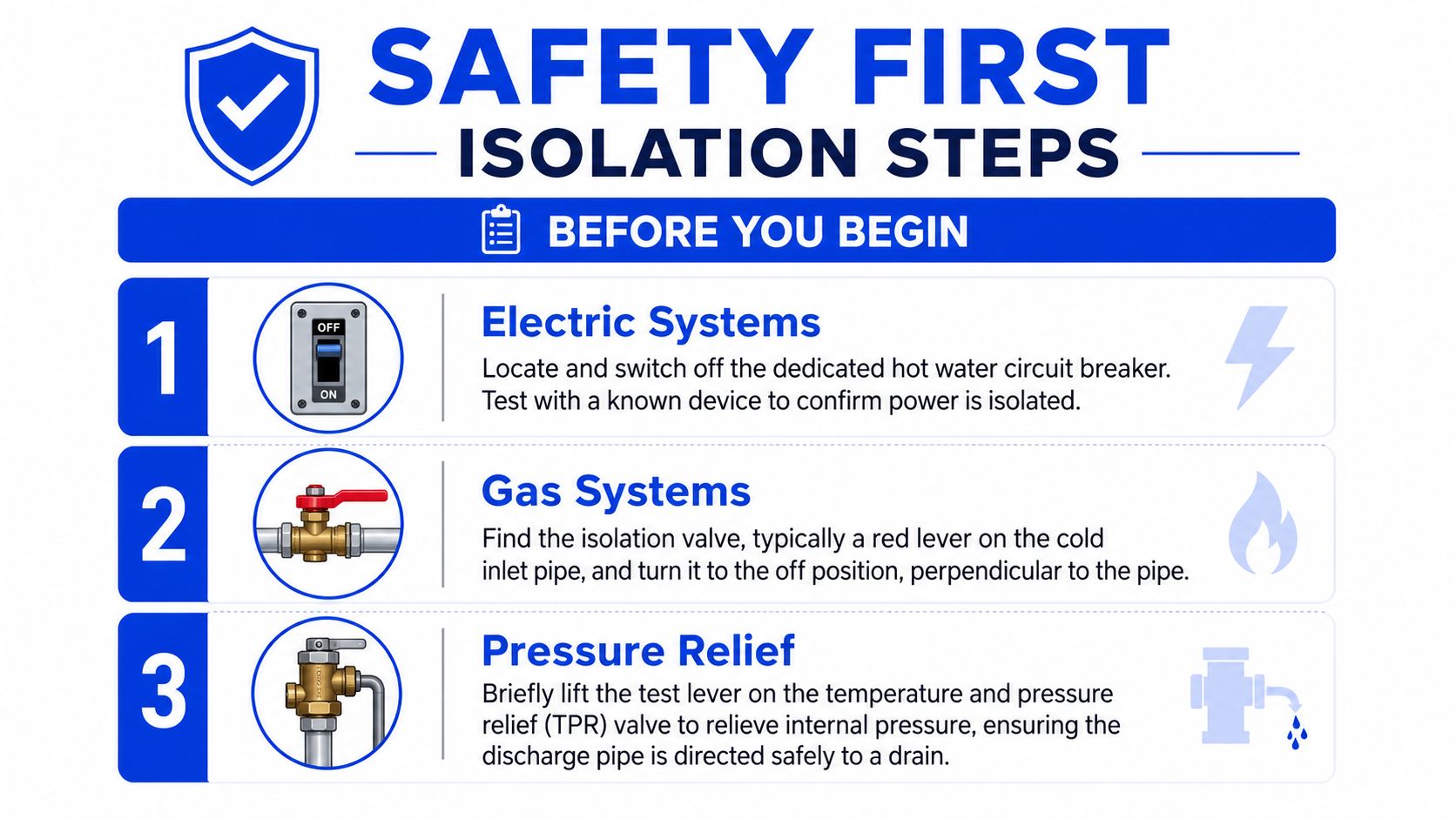
The three isolation points that matter
The cold-water isolation valve on the copper pipework above the heater should be easy to identify. If that valve is partially closed, the system can look broken when it's really just starved of flow. Check that it's fully open before you assume the unit has failed.
If you smell gas, don't relight anything. Shut the area down, keep clear, and call a licensed gas fitter. A gas appliance that won't light because of a supply or combustion issue is one thing. A gas appliance in an unsafe atmosphere is another problem entirely.
The temperature and pressure relief valve is another place where caution matters. The outlet can be hot enough to scald, and pressure release should always be managed with the discharge path directed safely to a drain. If you're not sure which pipe is which, stop there.
If water is near the control gear, or the unit is making you hesitate, that's the stop point.
A torch, a thermometer, and a multimeter can help with basic checks, but they don't turn an unsafe job into a safe one. The smart move is knowing when the fault is beyond a homeowner's scope. That's not overcautious, it's good trade practice.
Diagnosing the Most Common Causes by System Type
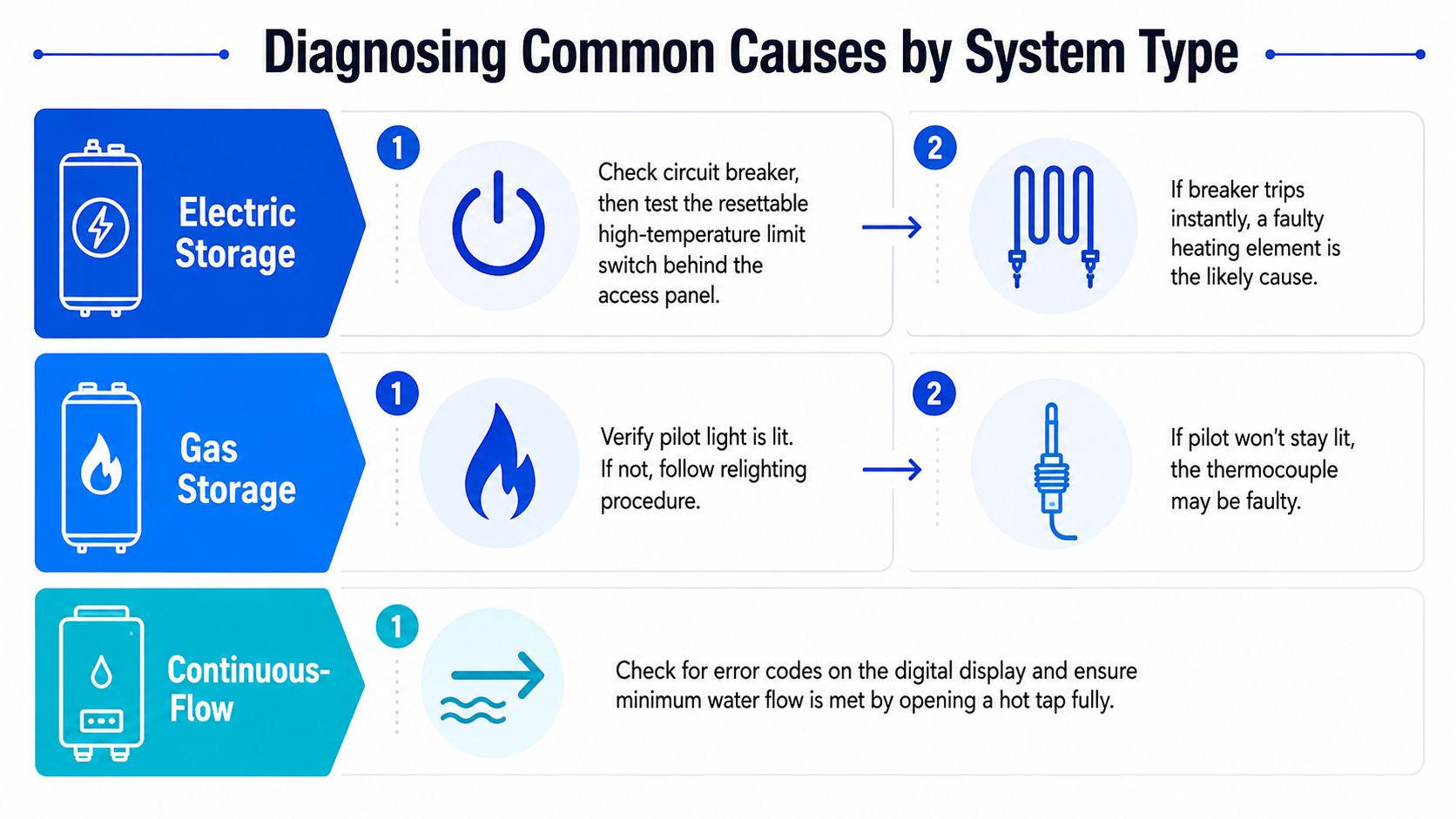
Electric, gas storage, and continuous-flow units fail in different ways, so the diagnosis has to match the system. A blanket “reset it and see” approach misses too much. Start with the system type, then move through the likely fault path in order.
Electric storage systems
With electric storage heaters, the usual sequence is breaker, high-limit reset, thermostat, then element. If the breaker has tripped once, reset it. If it trips again straight away, the fault is deeper and the element or wiring is usually in play. That's where a multimeter and proper access become important, and where a homeowner can easily get out of depth.
Gas storage systems
Gas storage units usually tell a different story. A pilot that's out, won't stay lit, or loses flame after relighting points to pilot, thermocouple, or gas-control trouble. If the pilot lights but the main burner doesn't come on, the issue may sit in the gas valve or burner assembly rather than the flame itself.
Continuous-flow units
Continuous-flow units depend on minimum flow, clear venting, and correct ignition sequence. If the tap flow is too low, the unit may never fire. If the intake or exhaust path is blocked, the appliance can behave like it has no fuel even when power and gas are available. Digital error codes are useful here because they narrow the fault, but they still need interpretation.
For a broader service overview, the hot-water systems page at Total Plumbing's hot-water systems service is the kind of place a property owner would look once the fault is past basic checks.
Diagnostic discipline: confirm cold water first, then power, then fuel, then component. Skipping the order is how simple faults get misread as major failures.
That order matters because it stops the common mistake of replacing a part before proving the rest of the system is healthy. A good diagnosis saves time, money, and repeat visits.
Safe DIY Fixes Worth Trying Before You Call
A cold shower on a Melbourne morning makes people want to start testing switches and valves straight away. That only helps if the fault is still in the simple, visible part of the system. Once the problem sits inside the heater, the gas line, or the temperature-control gear, a homeowner can do more harm than good.
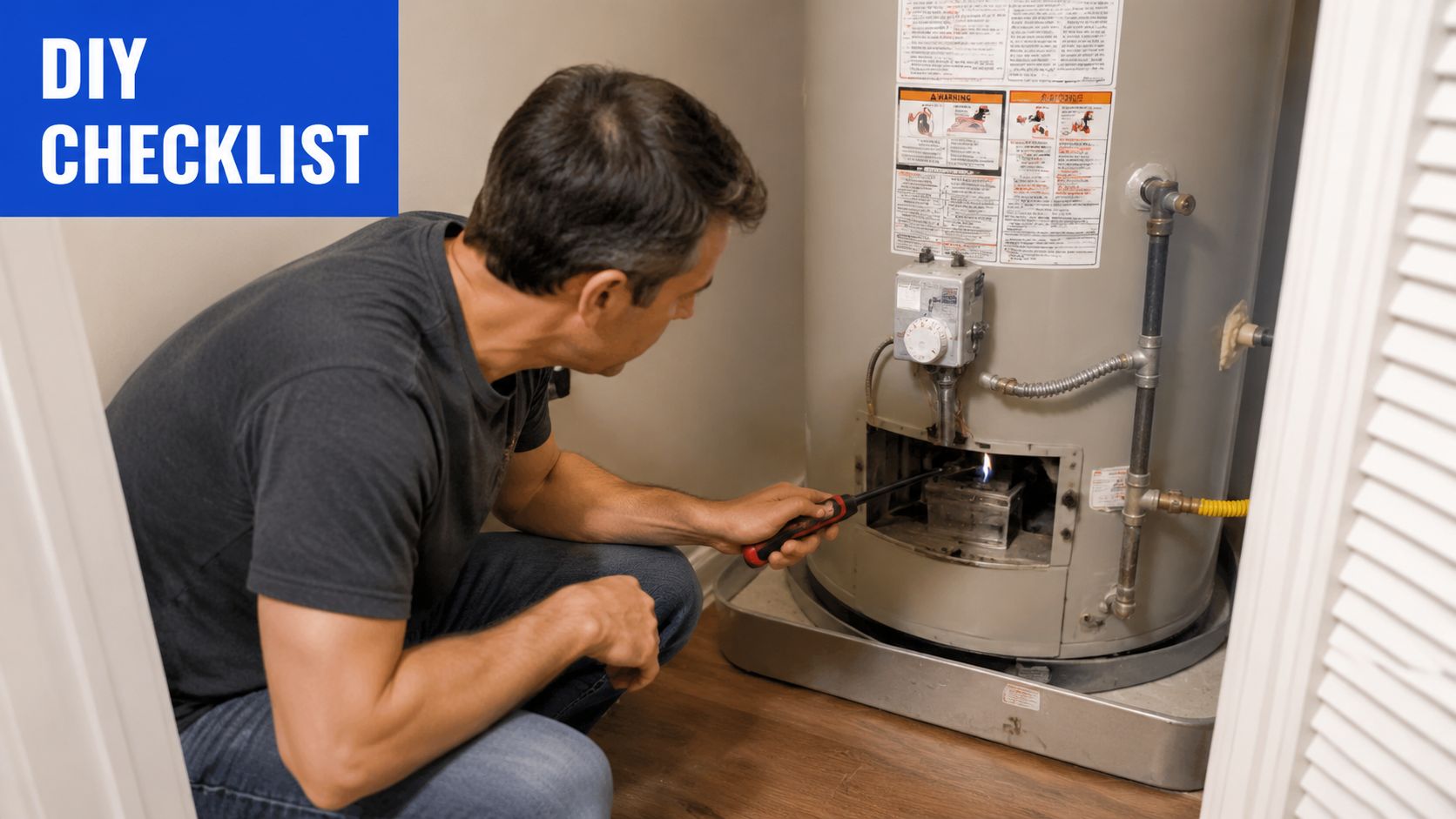
Checks that are fair game
Start with the obvious things that do not require opening the appliance. Confirm the cold-water isolation valve is fully open, then check the thermostat setting and the actual outlet temperature at a tap with a thermometer. A dial can look fine while the delivered water is still off target.
- Relight the pilot on a gas storage unit: Only if the manufacturer's instructions are clear, the area is ventilated, and there's no gas smell. If the pilot won't hold, stop there.
- Press the high-limit reset on an electric storage unit: Do this only after switching off power at the breaker. If it trips again, the reset wasn't the fix.
- Check the tap end, not just the heater: If one outlet is lukewarm while others are hotter, the fault may sit downstream in the tempering valve or the branch line rather than in the tank itself.
- Give a recently refilled or reset storage unit time to recover: A tank that has just been drained, isolated, or reset will need a recovery period before you judge whether it is heating properly (Amari Plumbing and Gas Fitting).
The standard domestic hot-water reference in Australia is 60°C, so lukewarm water often points to a control issue rather than a dead heater. Use that as a check against the tap reading, not as a substitute for proper diagnosis (Amari Plumbing and Gas Fitting).
A tempering valve can make a healthy system look faulty. If the water at the tap is lukewarm or swings between hot and cold, the heater may be producing hot water and the valve may be sticking or out of calibration. That is one of the main reasons Melbourne DIY checklists stop too early, because the fault feels like the heater when the heater is not the part failing.
Continuous-flow units need a slightly different read. Low tap flow, a blocked intake or exhaust path, or the wrong ignition sequence can all stop the unit from firing even when power and gas are present. That is why a quick reset often misleads people, especially where gas fitting lines or appliance connections need a proper check by a licensed tradesperson.
The serious stop points are just as important as the safe checks. Don't replace elements, swap thermocouples, work on gas valves, or touch flueing if you're not licensed. For tanks nearing end-of-life, serial-plate decoding matters because age changes the repair-versus-replace call, and the wrong part choice can waste time on a unit that's already on borrowed time.
The Causes Most DIY Checklists Miss
Generic troubleshooting pages love breaker checks and pilot lights. They often miss the things that make Australian homes different, especially in places with compliant temperature-control hardware and shared infrastructure.
Tempering valves and compliance issues
A tempering or mixing valve can fail in a way that looks like a heater fault. The outlet may run lukewarm, or the temperature may swing around instead of staying stable. That's not the same as a total outage. Industry guidance flags tempering-valve malfunction as a common miss in basic checklists, and NSW Fair Trading notes that hot-water systems must be installed and maintained to meet temperature-control requirements for safety (Inspectapedia overview).
The best way to separate the two is by observing the system after the valve point, not just at the heater. If the heater is producing hot water but the taps are not, the issue may sit in the temperature-control hardware rather than the appliance itself. That's a plumber job, not a guess-and-see job.
Building-wide and property-wide faults
Hot water can also fail because the building is the problem, not the unit. Supply interruptions, airlocks, pressure issues, and maintenance can affect the whole property. In apartments, townhouses, or managed complexes, the fault may sit with the body corporate, landlord, or water utility rather than the person inside the unit.
That matters in the western suburbs because a lot of calls start with a tenant or owner asking a very fair question, “Is my hot water service broken, or is the building at fault?” The quickest way to answer it is to check whether multiple fixtures are affected, whether neighbouring units have the same issue, and whether there's been recent utility or maintenance work nearby. For gas-fit-related work, a licensed team such as Total Plumbing's gas fitting services is the right sort of contractor to bring in when the fault sits beyond simple appliance checks.
If every tap in the home behaves the same way, think whole-system.
If one fixture is off and the others are fine, think local fault.
That distinction saves a lot of unnecessary replacement work. It also stops landlords and owners from blaming the wrong component when the issue is upstream.
When to Call a Professional and What to Expect
There are clear lines where DIY stops. If you smell gas, see water near electrical components, spot visible leaks, hear a tank rumbling, get repeated reset trips, or the unit is old enough that repairs are getting frequent, call a licensed plumber. Discoloured water is another warning sign because it can point to corrosion or internal deterioration rather than a simple control issue.
What a proper local response looks like
In Melbourne's western suburbs, same-day hot-water changeovers are commonly offered in Caroline Springs, Taylors Hill, Deer Park, Hillside, and Sydenham. Many providers also handle removal of the old unit, which saves a second booking and gets the house back to normal faster. For properties where cash flow matters, interest-free payment options are sometimes available, but that still shouldn't replace proper workmanship and compliance.
The better local operators give upfront pricing, turn up on time, and stand behind the work with a workmanship guarantee. That's more important than the cheapest headline quote. A hot-water job done poorly becomes a repeat call, and that costs more in the end.
Typical 2026 hot water service costs in Melbourne's western suburbs
| System Type | Call-Out & Diagnostic | Common Repair | Full Replacement, Supply + Install |
|---|---|---|---|
| Electric storage | Qualitative estimate only, varies by access and fault | Qualitative estimate only, varies by element, thermostat, or wiring issue | Qualitative estimate only, varies by capacity and location |
| Gas storage | Qualitative estimate only, varies by access and fault | Qualitative estimate only, varies by pilot, thermocouple, or gas-control issue | Qualitative estimate only, varies by model and venting requirements |
| Continuous-flow | Qualitative estimate only, varies by access and fault | Qualitative estimate only, varies by ignition, flow, or sensor issue | Qualitative estimate only, varies by brand and install complexity |
If you want a local reference point for hot-water changeovers and related service work, Total Plumbing's Caroline Springs hot-water systems page is the kind of service listing that matches what western suburbs homeowners usually need when the system can't be revived cheaply.
Your Pre-Call Checklist and Key Takeaways
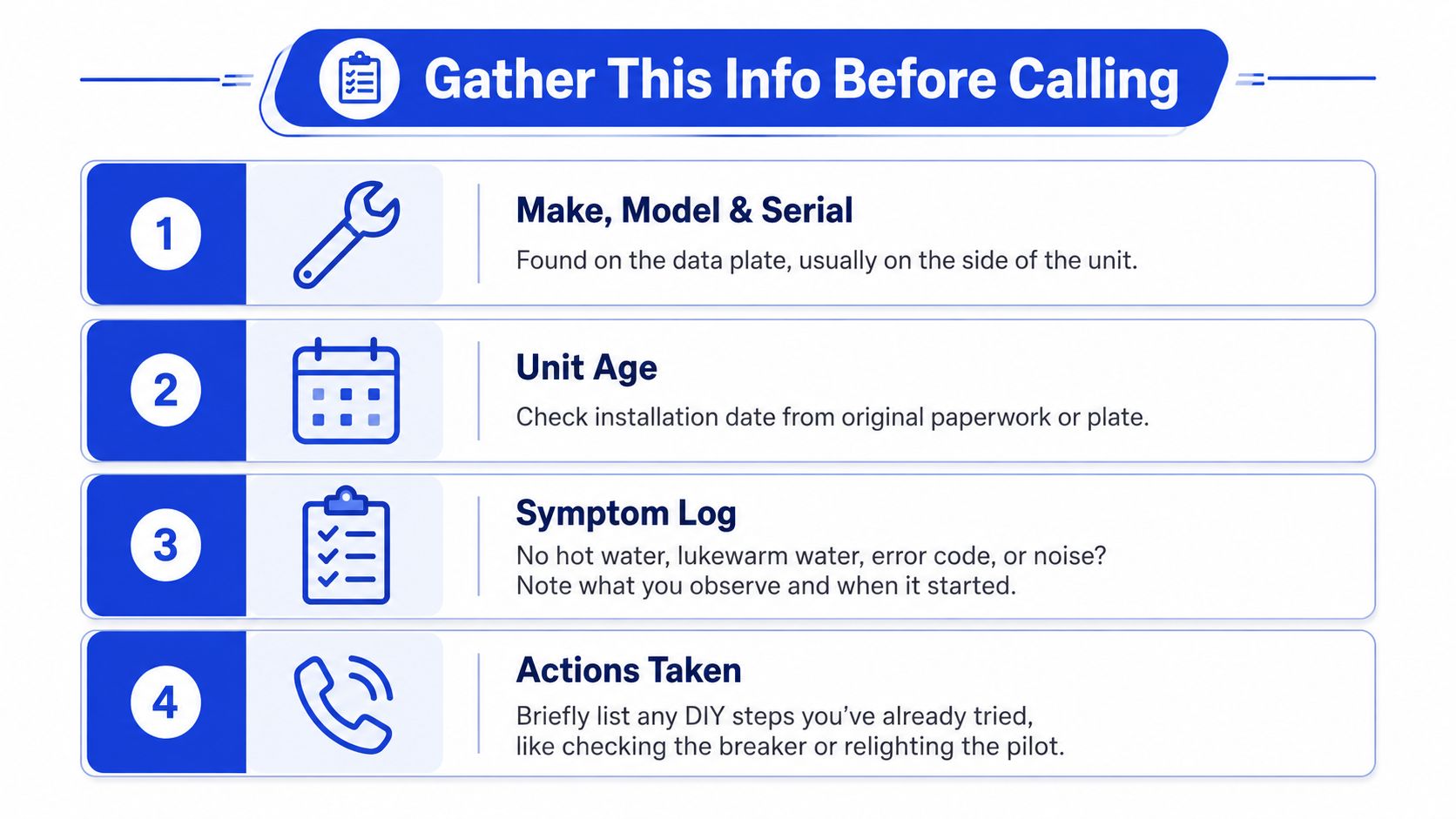
Before you call, gather the make, model, serial number, unit age, fuel type, symptoms, and what you've already tried. A photo of the data plate, the surrounding pipework, and any error code saves time on the phone and helps the plumber bring the right parts. That's especially useful when the fault turns out to be a tempering valve, a supply issue, or a unit that's at the end of its service life.
Takeaways that matter:
- Start with safety.
- Separate supply problems from heater problems.
- Don't ignore tempering-valve or compliance-related faults.
- Stop at the edge of safe DIY work.
If the shower has gone cold before the school run, the goal is to get the house functional again without turning a simple fault into a bigger one. For households in Caroline Springs, Taylors Hill, and across Melbourne's western suburbs, same-day changeover is often the fastest path back to normal.
If you've got no hot water, lukewarm water, or a system that keeps tripping out, book a licensed local plumber who can diagnose the fault properly and get the job done safely. Total Plumbing & Hot Water Systems handles hot-water repairs, installations, and changeovers across Melbourne's western suburbs, with the practical response and clear communication this kind of job needs.