




A faint hiss beside the hot water tank, a small puddle on the driveway, or a thin trickle running down an outside wall after someone's shower can look like a minor plumbing nuisance. In a Werribee, Sunshine, Caroline Springs or Taylors Hill home, it may be the first visible sign that the hot water system pressure relief valve is releasing water, leaking, or no longer operating as it should.
That valve is the tank's emergency exit. It protects the heated-water container when temperature or pressure moves beyond the safe operating range. A discharge can be normal during heating, but a continuous leak, blocked outlet or silent valve on an ageing system deserves attention. The rules governing the device aren't optional installer preferences. They sit within Australia's plumbing and building compliance framework.
Table of Contents
- Why a Hot Water Pressure Relief Valve Matters More Than Most Homeowners Realise
- How a Hot Water System Pressure Relief Valve Actually Works
- The Australian Standards Behind Every Compliant Valve
- Warning Signs Your Pressure Relief Valve Is Failing
- Safe Checks a Homeowner Can Run Without Touching the Valve
- Testing, Repairs, and Replacement Compared
- Melbourne Compliance and Discharge Line Rules
- Getting Local Help From Total Plumbing & Hot Water Systems
Why a Hot Water Pressure Relief Valve Matters More Than Most Homeowners Realise
A storage hot water tank heats a contained volume of water. As that water warms, it expands. If the system can't accommodate the expansion, pressure rises inside the vessel and connected pipework. The relief valve provides a controlled path out before pressure or temperature places excessive stress on the equipment.
The risk isn't limited to a wet patch on the concrete. A thermostat fault can allow water to become dangerously hot, creating a scalding hazard at outlets. Excessive pressure can strain the cylinder, fittings and nearby pipework, particularly in a mains-pressure installation. Sudden pressure changes can also contribute to noisy pipework and water hammer, although a relief valve isn't a substitute for proper pipe support or a correctly designed plumbing system.
Practical rule: A relief valve that's dripping constantly is not “just letting off a bit of pressure”. It needs assessment.
What a small leak can tell you
An occasional discharge while the tank heats may indicate thermal expansion. A steady trickle can point to debris on the valve seat, scale, corrosion, incorrect system pressure or a valve that no longer reseats properly. Water at the tank base might come from the discharge line, a cylinder connection, a safe tray or the vessel itself, so the source needs to be identified rather than assumed.
A valve that has seized shut can be more concerning than one that leaks. The leak is visible. A blocked or stuck mechanism may remain unnoticed until the system experiences an abnormal temperature or pressure event. Don't cap the outlet to stop an annoying drip, because that removes the route designed to make the system safer.
Why the local rules matter
For Melbourne's western suburbs, the relevant installation requirements are tied to national standards and the National Construction Code, not to the age or style of the property. An older weatherboard home and a newer estate townhouse can both have a non-compliant discharge arrangement if the outlet is obstructed, poorly positioned or directed where hot water could injure someone.
Homeowners, landlords and property managers should treat the valve as a safety component. Look for the warning signs, keep the discharge path clear, and have a licensed plumber investigate anything that looks abnormal.
How a Hot Water System Pressure Relief Valve Actually Works
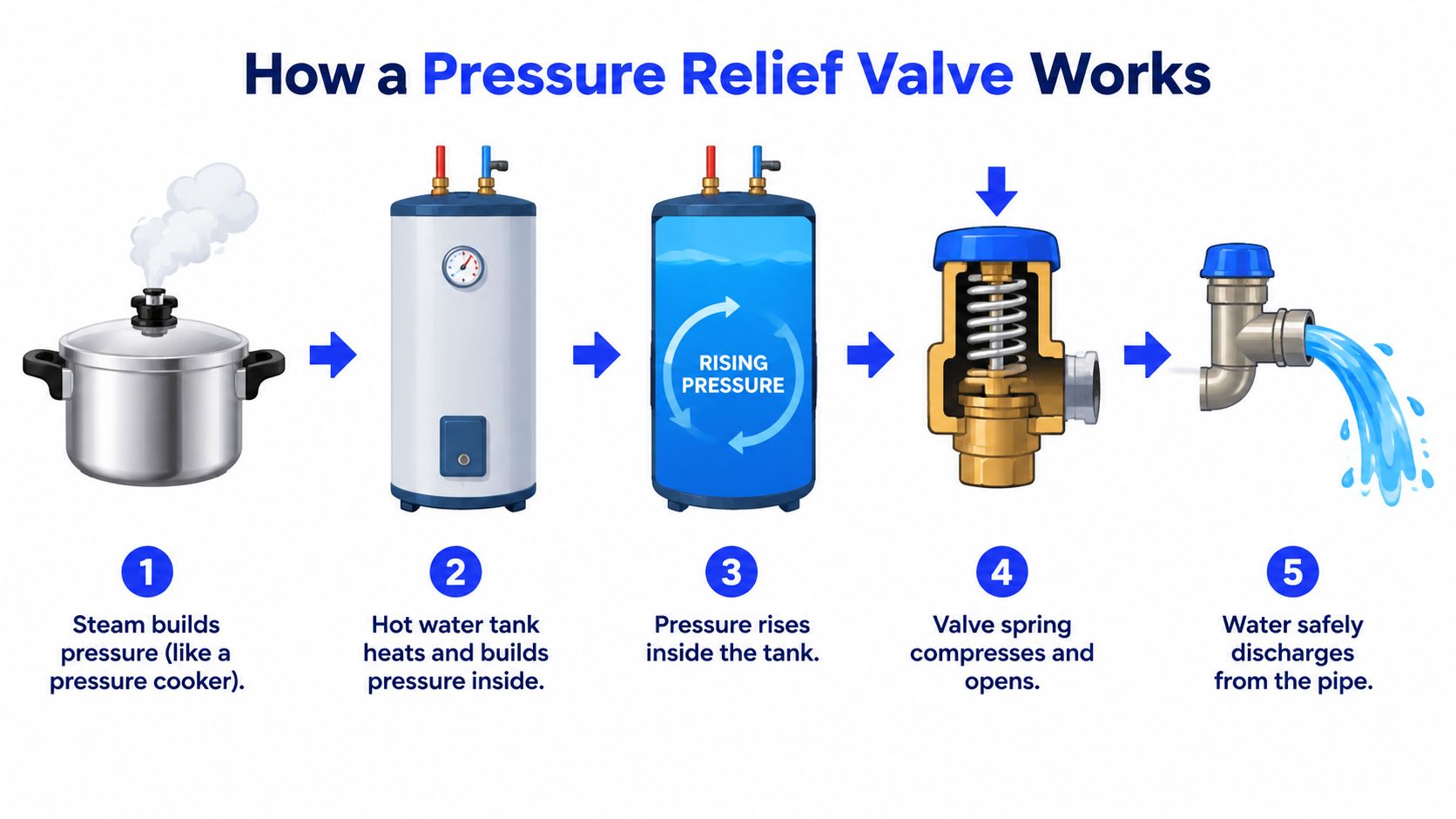
A storage hot water tank can build pressure as its water heats. The pressure relief valve provides a controlled escape route when temperature or pressure reaches an unsafe level. Its job is similar to the safety vent on a pressure cooker, although the valve must match the appliance and installation requirements.
Inside the valve, a spring-loaded seat normally remains closed. A temperature-sensing element or probe extends into the heated water, while the valve body connects to the discharge outlet. That arrangement lets the valve respond to conditions inside the vessel, rather than relying only on the temperature of the pipe outside it.
The pressure and temperature response
The sequence is straightforward:
- The heating element or burner raises the tank water temperature.
- Thermal expansion, a fault, or both increase pressure or temperature.
- Force on the valve seat overcomes the spring's closing force.
- The disc lifts from its seat.
- Hot water, and in an extreme event steam, flows through the discharge pipe until the condition reduces.
AS 1357.1 covers temperature and pressure relief valves and other protection valves in DN 15 to DN 50 sizes for warm and hot water systems. It sets the protection envelope at continuous temperatures not exceeding 85°C, emergency temperatures not exceeding 99°C, and continuous working pressure not exceeding 1400 kPa. These limits are documented in the AS 1357.1 resource.
The replacement still has to suit the appliance manufacturer's requirements and pressure class. A valve is not automatically suitable because its thread or body looks the same as the original. The rating, connection, and system design all need checking.
The part many people overlook
Mains-pressure systems may also have an expansion control valve. It manages pressure created by thermal expansion, while the temperature/pressure relief valve protects against excessive temperature and pressure at the storage vessel. The two components perform different jobs, so replacing one may not correct a fault in the other.
The discharge pipe is part of the protection system, not just a drain. It must remain unrestricted, fall continuously towards its outlet, and terminate where hot water or steam can be seen without creating an injury or property-damage risk. A correctly rated valve cannot work reliably if its discharge line is blocked, rises into a trapped section, or ends in an unsafe location.
For Melbourne homes, including properties in the western suburbs, Solar Victoria's hot water installation guidance provides a practical reference for the discharge arrangement homeowners should expect to see.
The Australian Standards Behind Every Compliant Valve
In a Melbourne western-suburbs home, compliance depends on more than finding a valve with the same thread. AS 1357.1 covers the valve's type and protection function. AS/NZS 3500.4 sets requirements for heated-water services, while NCC Volume Three connects the building plumbing rules with those Australian standards.
The valve must suit the storage tank, pressure class and appliance specifications. The installation also needs a discharge arrangement that can safely carry released hot water. A plumber should check the valve rating, pipe route, continuous fall and termination point before accepting a replacement.
The NCC protection outcome is specific. A heated-water container must have a temperature/pressure relief device that prevents the vessel exceeding the lesser of its maximum rated working pressure or 1400 kPa. Emergency water temperature must remain below 99°C. The relationship with AS/NZS 3500.4 is set out in the technical guidance published by Solar Victoria.
Limits that define the safety envelope
| Parameter | Compliant limit |
|---|---|
| Continuous system temperature | Not exceeding 85°C |
| Emergency temperature | Not exceeding 99°C |
| Continuous working pressure | Not exceeding 1400 kPa |
| Heated-water container protection | The lesser of the tank's maximum rated working pressure or 1400 kPa |
These limits are set out in the AS 1357.1 standard resource and the Solar Victoria heated-water technical guidance. They explain why a generic substitute can be unsuitable even when it fits the existing connection.
WaterMark approval, the correct pressure rating and compatibility with the appliance all matter. A non-compliant part can create warranty problems, complicate a future property sale and leave the owner with a discharge arrangement that fails plumbing requirements.
A relief valve is a regulated safety device, not a convenient stop valve for managing everyday drips.
The discharge line must carry the valve's released flow without a tap, shut-off valve, cap or other restriction. It needs a continuous fall to an outlet where escaping hot water or steam can be noticed without injuring someone or damaging the building. In western-suburbs properties, cramped roof spaces, extensions and poorly placed termination points can make that final arrangement just as important as the valve selection.
Warning Signs Your Pressure Relief Valve Is Failing
The first sign is often something you notice while walking past the tank, not while standing in the bathroom. Check the outlet and the area below it at different times, because a valve can behave differently during active heating and after the system has settled.
Read the pattern, not just the puddle
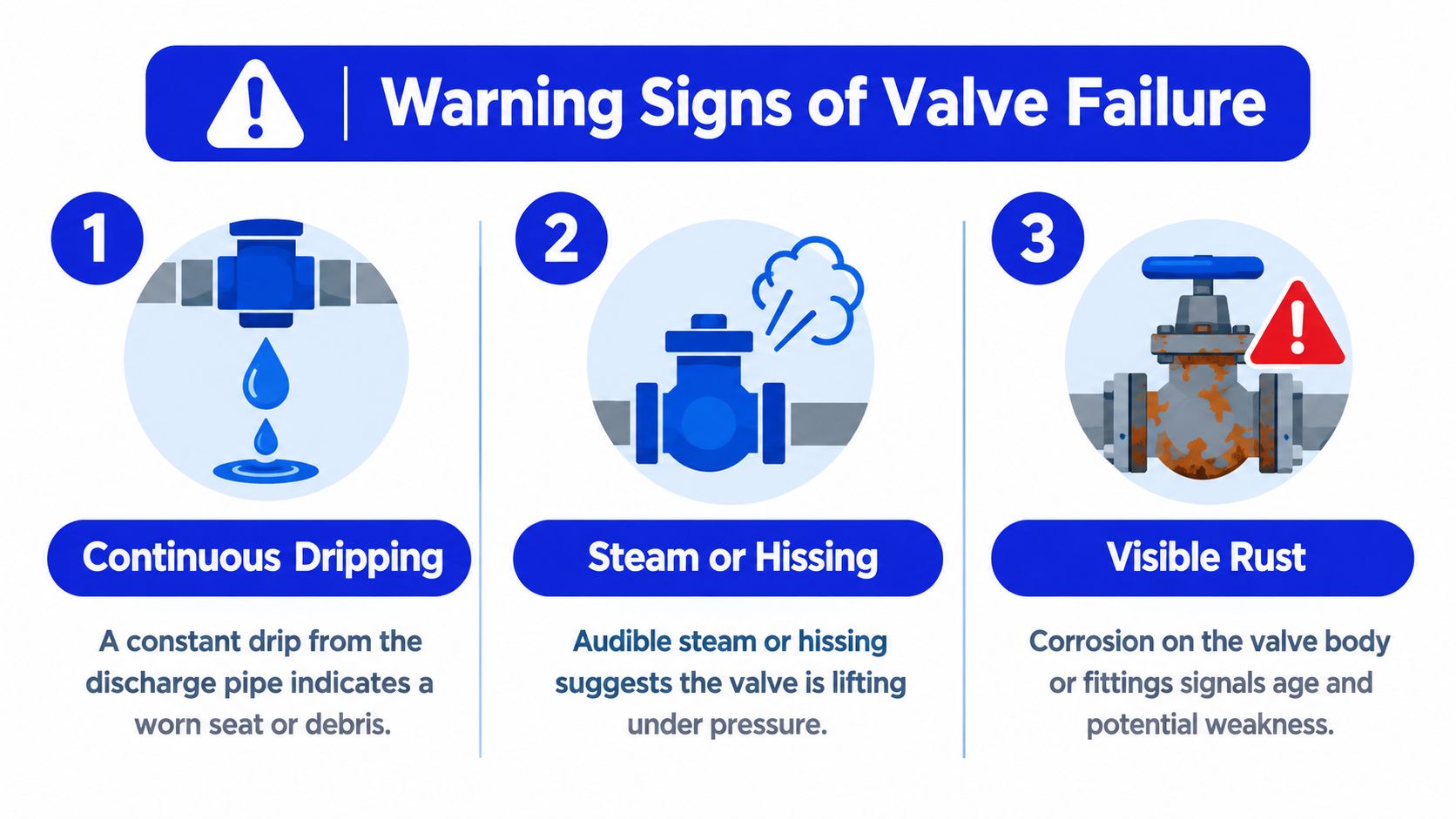
- Continuous dripping: A constant drip often means the valve seat has debris, scale or wear and isn't closing cleanly. It can also indicate a pressure problem elsewhere in the system.
- Intermittent discharge: Drips that start during heating and stop later may be associated with thermal expansion. That still deserves attention if the discharge is frequent or increasing.
- Water around the base: Pooling, staining or rust marks can indicate a valve discharge problem, a leaking connection, a tray issue or cylinder deterioration. Trace the water before choosing a repair.
- Rumbling or kettling sounds: Noisy heating alongside discharge suggests the tank or heating controls need a broader inspection, rather than a valve-only assumption.
- Steam or hissing: Audible hissing may mean hot water is lifting the valve under pressure or temperature. Keep clear of the outlet and arrange professional assessment.
- A completely dry valve: Silence and no visible water aren't proof of good operation. Scale or corrosion can seize the mechanism, leaving it unable to open when required.
- Rust on the valve body: Corrosion around the valve, fittings or discharge connection indicates age, moisture exposure or deterioration that should be assessed before the part fails.
A short release during a heating cycle can be part of normal system behaviour. A valve that never stops, releases unusually hot water, or shows corrosion needs a plumber to check the valve and the conditions causing it to discharge. If the water has reached flooring, framing or wall cavities, use a licensed leak detection and water leak repair service rather than treating the valve as an isolated cosmetic problem.
Don't place your hand beneath the outlet to judge temperature. Steam and discharged water can scald, and the outlet may be positioned closer to a path or doorway than you realise.
Safe Checks a Homeowner Can Run Without Touching the Valve
You can gather useful information without operating the valve. Start from ground level and observe the system during ordinary use. If the unit sits on a roof, in a ceiling space or behind a restricted access panel, don't climb up to inspect it.
Use your eyes and ears
Look at the discharge outlet from a safe distance. Note whether water is dripping, running, steaming or leaving mineral staining. Check whether the pipe ends in a visible location and whether its opening is clear of soil, mulch, stored items, spider webs or anything else that could restrict the flow.
Listen during a heating cycle. Hissing, repeated discharge noise or unusual tank rumbling gives the plumber useful information, but it doesn't identify the exact fault by itself. Write down whether the sound occurs after a shower, while a gas burner is operating, or when an electric element has been heating.
Inspect the ground, safe tray and visible pipe connections for water marks. A dry surface doesn't rule out a failed valve, particularly on an older system where corrosion may have stopped the mechanism moving.
What you must not do
- Don't lift the lever: The valve may release scalding water, and an old valve may fail to reseat after being operated.
- Don't cap the pipe: Blocking the discharge removes the intended relief path and creates a serious safety risk.
- Don't block the outlet for a drip test: Use observation only. Never place a hand, container or fitting over the opening.
- Don't stand on the tank or roof: Access work belongs to a licensed professional with suitable equipment.
- Don't disconnect electrical or gas components: A valve problem can sit alongside a heating or thermostat fault.
If the outlet is releasing steam, the tank is making violent noises, or water is moving towards electrical equipment, keep people away from the area and seek urgent plumbing assistance. A homeowner's role is to observe and report. Physical testing, lever operation and replacement require the right trade skills and safe isolation procedures.
Testing, Repairs, and Replacement Compared
A suspected fault creates a choice between watching the problem, attempting a test or arranging a professional inspection. For a pressure relief valve, DIY testing has a poor trade-off. You may confirm that the lever moves, but you can also disturb an old seal, release dangerously hot water or leave the valve leaking when it doesn't reseat.
A licensed plumber can operate the valve briefly under controlled conditions, check whether it closes cleanly, inspect the discharge path and assess whether pressure or temperature is driving the release. If the mechanism fails to reseat, replacement is generally more reliable than trying to clean a safety-critical valve in place.
What the repair decision usually looks like
| Option | Who does it | Typical cost (AUD) | Best when |
|---|---|---|---|
| Observation only | Homeowner | Not specified | The discharge is unclear and there's no immediate hazard |
| Valve inspection and testing | Licensed plumber | Not specified | The valve drips, hisses, shows corrosion or behaves inconsistently |
| Valve replacement | Licensed plumber | Not specified | The valve won't reseat, is damaged, incorrectly rated or unsuitable |
| Broader hot water service | Licensed plumber | Not specified | The tank also shows heating, connection, noise or age-related concerns |
| System replacement | Licensed plumber | Not specified | The cylinder or associated equipment is no longer economical or safe to retain |
No reliable cost ranges are provided here, so a plumber should quote after checking the valve, brand, access and installation arrangement. A ground-level unit in a clear side passage is a different job from a tank in a confined roof space, and after-hours attendance can also change the price.
The three practical outcomes
Valve only: If the cylinder, thermostat, connections and discharge route are sound, a like-for-like compliant valve replacement may resolve the issue. The replacement must match the appliance and pressure requirements, not merely the existing thread.
Valve plus service work: On an older system, the plumber may find an anode, thermostat, expansion control component or connection that needs attention. Replacing one small part without addressing the cause of repeated discharge can leave the homeowner with the same fault.
System upgrade: If the tank has widespread corrosion, persistent leaks or a failing heating system, a new valve may only postpone a larger failure. A plumber should explain whether a valve replacement is a sensible repair or whether the cylinder itself has reached the end of its practical service life.
The best result comes from testing the complete safety arrangement, including the valve, tank condition and discharge line. A part swap without diagnosis is what doesn't work.
Melbourne Compliance and Discharge Line Rules
In Melbourne's western suburbs, a pressure relief valve can be correctly rated while its discharge arrangement remains unsafe. Older weatherboard homes may have outlets directed towards a path or wall. Newer estates often place cylinders in confined roof spaces, making poor discharge routing harder to see and maintain.
Valve construction and rating are covered by AS 1357.1. Installation requirements sit under AS/NZS 3500.4, while the plumbing provisions are recognised through NCC Volume Three. These requirements apply in Deer Park, Sunshine West, Hoppers Crossing, Caroline Springs and other Melbourne suburbs.
What a compliant outlet needs to achieve
The discharge line must let released hot water and steam escape freely. It needs no taps, valves or other restrictions, a continuous fall towards its termination, and an outlet positioned so operation is readily visible without creating a burn or property-damage hazard. Solar Victoria's compliance guidance confirms that the drain line forms part of the safety installation, rather than being a cosmetic finishing detail.
A plumber should examine the following:
- Clear flow: Nothing downstream can cap, close or obstruct the pipe.
- Continuous fall: The line does not rise, sag into a water trap or retain water in a low section.
- Safe termination: Hot water cannot discharge onto a walkway, doorway, living area or other place where someone may be burned.
- Visible release: A resident or inspector can see when the valve has operated.
- Approved connection: The pipe and fittings suit the temperature and discharge duty.
- Ceiling-space protection: A tank in a roof or ceiling space needs an arrangement that manages leaks and limits building damage.
The line must not run into stormwater or be altered to conceal discharge. A safe tray does not replace the relief discharge arrangement, and temperature/pressure relief discharge must not terminate into that tray.
Look for practical warning signs: a pipe aimed across a pathway, disappearing into a drain, capped at the end, or running uphill. Each arrangement can restrict visibility or interfere with safe discharge. A compliance inspection checks whether water can leave the system safely and whether the termination exposes people or the property to heat and water.
Arrange an assessment through a qualified hot water plumber in Melbourne's western suburbs if the discharge route appears altered, obstructed or difficult to see. A leaking valve may draw attention to the fault, but the underlying compliance problem can exist before any visible leak.
Getting Local Help From Total Plumbing & Hot Water Systems
A proper pressure relief valve service starts with diagnosis, not a guess based on the puddle. Total Plumbing & Hot Water Systems works across Caroline Springs, Taylors Hill and Melbourne's western suburbs, including urgent hot water call-outs and routine maintenance for domestic and commercial properties.
The plumber's inspection should establish what valve is fitted, whether its rating suits the hot water unit, and whether the discharge line is compliant. The process commonly includes:
- Identifying the valve brand, type and visible condition.
- Checking the tank, connections, tray and surrounding area for evidence of leakage.
- Assessing the discharge route, fall, outlet visibility and obstructions.
- Testing operation safely where appropriate.
- Comparing the installation against the appliance requirements and the relevant Australian plumbing framework.
- Explaining whether the sensible repair is a valve replacement, wider service or full system changeover.
For a replacement, the plumber isolates the system, manages the water safely, removes the unsuitable or failed component, fits the correct valve and confirms that the discharge path can operate without restriction. The system should only be re-energised after the tank and connections have been checked for safe operation.
Local conditions affect the work. A valve on an accessible ground-level cylinder is different from one attached to a roof-mounted or confined installation. Older properties may need discharge corrections, while newer homes can require careful access planning around compact roof spaces. A clear written explanation helps the homeowner decide whether to repair now or plan a broader upgrade.
For homeowners in the area, the Caroline Springs hot water service team can inspect dripping valves, discharge arrangements and related hot water faults. Ask for the findings in writing, including the valve condition, the reason for discharge and any compliance issue that needs correcting.
Total Plumbing & Hot Water Systems provides licensed inspections, compliant pressure relief valve replacements and hot water repairs across Melbourne's western suburbs. Visit Total Plumbing & Hot Water Systems to arrange an inspection or request help with an urgent weeping valve before a small discharge becomes a larger safety or water-damage problem.