





Bathroom renovations in Australia typically range from $8,000 for a basic refresh to $40,000 or more for a premium overhaul, and the national average sits at about $26,000. If you're renovating in Melbourne's western suburbs, that headline number is only the starting point because older homes and plumbing changes can push the actual cost higher than many online guides suggest.
The renovation process often begins in the same place: a bathroom that feels tired, cramped, dated, or just plain awkward to use. Property owners want to know what the job will cost before they rip into tiles and fittings. Fair question.
The problem is that a lot of renovation advice stays too broad. It gives a national average, maybe a few price bands, then leaves out the part that often blows the budget in Caroline Springs, Taylors Hill, and older parts of Melbourne's west. That missing part is usually plumbing work hidden behind the walls, under the floor, or inside an old layout that doesn't suit modern fixtures.
A proper bathroom renovation cost breakdown isn't just about choosing tiles and taps. It's about understanding what can stay, what has to move, what must meet compliance, and what tends to go wrong once demolition starts. If you get those decisions right early, you can spend your money where it matters and avoid paying twice for the same work.
Table of Contents
- Starting Your Bathroom Renovation Journey
- Budget Standard and Premium Renovation Tiers Explained
- The Core Cost Components of Every Bathroom Renovation
- Example Budgets for Melbourne Homeowners
- Hidden Costs Most Guides Forget Especially in Melbourne
- Your Renovation Timeline and Smart Savings Strategies
- Plan Your Project with a Professional Plumber
Starting Your Bathroom Renovation Journey
Saturday morning, someone steps out of the shower onto a floor that never quite dries. The grout is stained, the vanity carcass is swollen, and the mirror light flickers when the exhaust fan is on. That is usually when a bathroom renovation stops being a someday job and becomes a real one.
The first question is not what tiles to pick. It is what is actually wrong with the room. In Melbourne's western suburbs, that matters more than many owners expect, especially in older brick veneer and weatherboard homes where the plumbing has been altered a few times over the years. A bathroom can look tired and still be structurally straightforward. It can also look serviceable and hide drainage, venting, water damage, or pipework problems that add serious cost once the room is opened up.
I tell clients to treat the early planning stage like fault-finding. Work out whether the job is mainly cosmetic, or whether you are changing how the bathroom functions. That single difference shapes the rest of the budget.
In this part of Melbourne, the expensive surprises are often under the floor or inside the wall. Moving a shower, toilet, or vanity sounds simple on paper, but in older homes it can mean regrading wastes, chasing pipework through brick, replacing sections of aged copper or galvanised line, and bringing old work up to current standard. That is where budgets blow out by 20 to 30 percent. Not because the renovation got fancier, but because the plumbing had to be rebuilt properly.
Practical rule: If the bathroom only needs to look better, keep the layout. If you want it to work differently, allow for plumbing reconfiguration from the start.
Before you choose products, get clear on four points:
- What stays where it is: Keeping the toilet, shower, and vanity in place usually saves the most money.
- What has to be opened up: Older homes often need wall and floor access before anyone can price the job properly.
- What standard you expect at the end: A rental refresh, a family bathroom rebuild, and a long-term owner-occupier upgrade are different jobs.
- What problems demolition might expose: Water damage, failed waterproofing, rotten sheeting, and old pipework are common once the strip-out starts.
Homeowners who get these basics sorted early usually spend better. They put money into drainage, waterproofing, and proper rough-in work first, then choose finishes that fit what is left in the budget. That approach saves a lot of grief later.
Budget Standard and Premium Renovation Tiers Explained
The easiest way to read a bathroom renovation cost breakdown is by tier. Not every renovation is a full redesign, and not every bathroom needs luxury finishes to feel new.
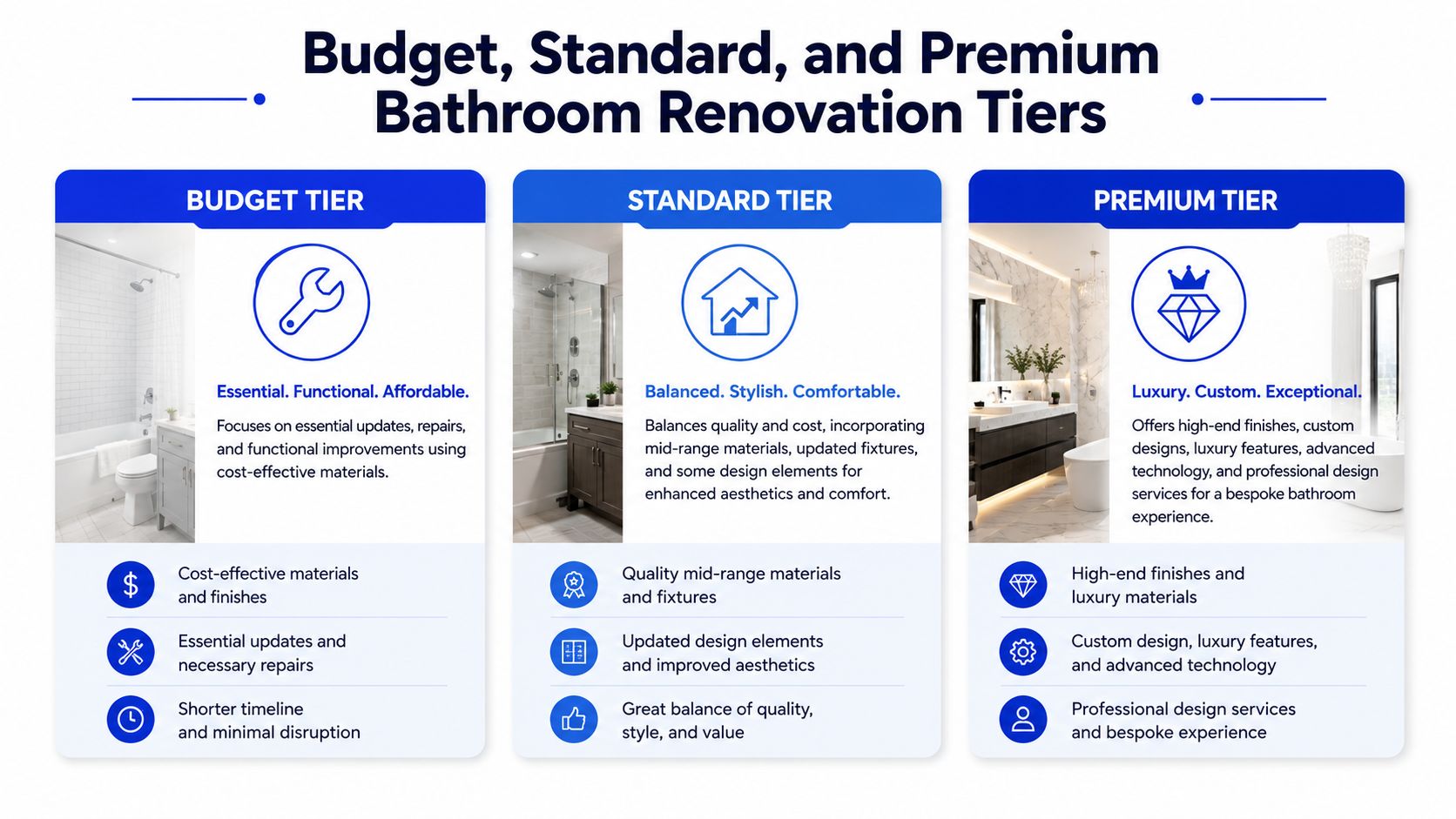
According to Three Birds Renovations' bathroom cost guide, budget renovations typically range from $8,000 to $15,000, standard or mid-range renovations cost between $15,000 and $35,000, and premium or luxury renovations exceed $35,000, often starting at $50,000.
Budget tier
A budget renovation is usually a cosmetic refresh. The biggest saving comes from leaving the plumbing and electrical layout where it is. You're improving what's visible, not rebuilding the room from scratch.
That often suits a bathroom that's tired but still functional. Think new fittings, fresh surfaces, a replacement vanity, updated screens, and straightforward tile or finish selections.
What works in this tier:
- Keep the toilet vanity and shower positions the same: That avoids extra drainage and pipe relocation.
- Choose simple proven products: Standard-size vanities, off-the-shelf tapware, and common tile sizes help.
- Fix what's failing first: Leaks, worn seals, and damaged substrates should come before decorative upgrades.
What doesn't work is trying to force a designer layout into a budget number. The minute fixtures move, it stops being a budget renovation.
Standard tier
Most family bathrooms often fall into this range. A standard renovation gives you room to improve both function and finish quality without going fully custom.
You can usually make sensible layout adjustments, choose better fixtures, and lift the overall feel of the space. This is also the tier where many homeowners in Melbourne's west get caught out. The budget looks comfortable on paper, but hidden plumbing changes can chew through it quickly if the existing room is dated or awkward.
A mid-range bathroom can look premium if the layout is smart. A premium-looking layout with the wrong plumbing plan often ends up costing more than it should.
Premium tier
A premium renovation is a different job altogether. It often means structural changes, major layout redesign, high-end finishes, custom joinery, and feature items that need more time to install and coordinate properly.
This tier can absolutely be worth it if it suits the house and long-term plans. But premium doesn't just mean expensive products. It usually means more labour, more coordination, more compliance detail, and less tolerance for anything being out of square, out of level, or roughly finished.
A premium bathroom works best when the room's bones justify the spend. In a poorly planned space, high-end products won't fix a bad layout or drainage problem.
The Core Cost Components of Every Bathroom Renovation
Bathroom costs blow out in the same places over and over. It usually starts once the old room is stripped and the underlying condition of the plumbing, floor, and walls is exposed. In Melbourne's western suburbs, that risk is higher in older brick veneer homes and weatherboards where pipework has been patched, falls are poor, or the original layout never worked well in the first place.
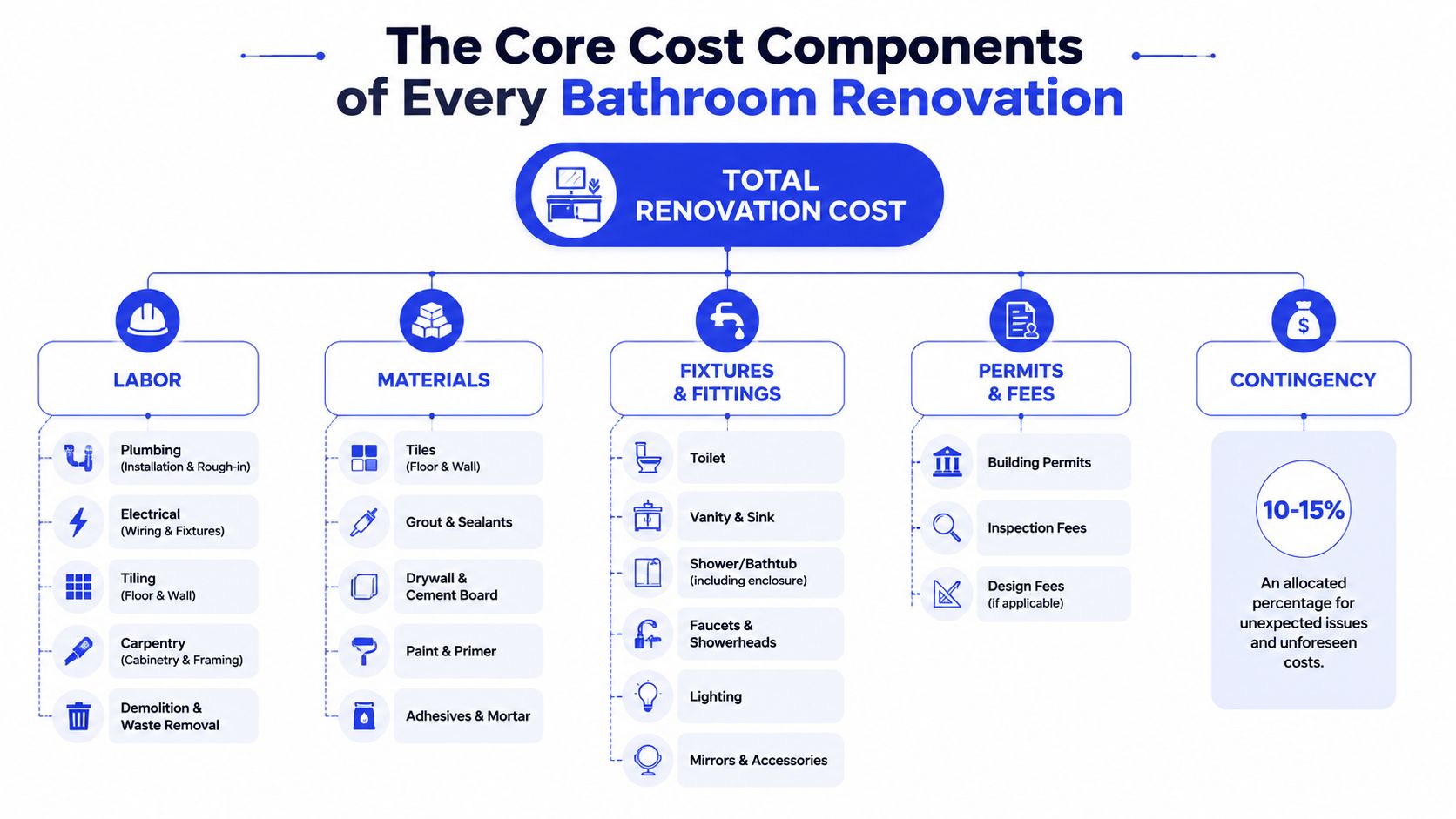
A bathroom budget is usually split across demolition, plumbing, electrical, waterproofing, tiling, fixtures, waste removal, and final fit-off. Plumbing carries more weight than many owners expect because it affects layout, drainage, compliance, and whether the room is functional after the tiles are on. Homes To Love notes that plumbing labour can take a meaningful share of a bathroom renovation budget, and hourly rates add up quickly once drainage and fixture positions change, according to its bathroom renovation cost overview.
Demolition and strip-out
Demolition is the point where assumptions get tested.
A proper strip-out means removing fixtures, wall and floor coverings, and damaged substrate without creating new problems. The room also needs to be made safe so trades can work properly. Water must be isolated. Waste has to be removed. Nearby finishes often need protection if the bathroom sits inside an occupied home.
Older homes in the west often hide the expensive stuff here. I see failed shower bases, rusted pipe sections, old galvanized lines, loose floors, and walls that are too far gone to tile over. None of that shows up in a tile showroom or a neat online estimate.
Typical costs at this stage include:
- Removing old fixtures such as the toilet, vanity, shower screen, bath, tapware, and accessories
- Pulling up tiles and substrate where the surface underneath is damaged or unsuitable
- Waste disposal for heavy rubble, plaster, broken sheeting, and wet-area debris
- Make-safe work so plumbing and electrical services are isolated before the rebuild starts
Plumbing rough-in and fit-off
Plumbing is often the biggest swing factor, especially if the layout changes. Keeping a toilet, shower, and vanity close to their existing positions usually saves money. Move them across the room, and the job can involve new water lines, new drainage runs, floor cutting, extra labour, and more time coordinating with other trades.
That is why older Melbourne bathrooms can jump in cost fast. Once the slab needs chasing or the subfloor needs alteration to correct waste locations and falls, the budget can move well beyond the product selection alone.
Fit-off is the final connection stage after waterproofing, tiling, and joinery are done. It sounds simple, but during this stage, delayed deliveries, wrong rough-in depths, and mismatched fixtures cause hold-ups. If your renovation includes a cylinder upgrade, tempering valve changes, or a capacity check for a second shower, scope that work early. A new bathroom still needs reliable hot water, so it helps to review your options for hot water systems before the plumbing plan is locked in.
| Cost component | What it usually covers | Why it matters |
|---|---|---|
| Demolition | Strip-out, removal, waste | Reveals the actual condition of the room |
| Plumbing | Rough-in, drainage, fit-off | Affects function, compliance, and layout cost |
| Electrical | Wiring, lighting, ventilation | Covers safety, lighting quality, and exhaust performance |
| Waterproofing | Membranes and wet-area prep | Protects framing, floors, and adjoining rooms from moisture |
| Tiling and finishes | Floor and wall surfaces | Drives labour time and the final appearance |
| Fixtures and fittings | Vanity, toilet, tapware, bath, screens | Changes both upfront spend and daily usability |
Waterproofing tiling and finishes
This part gets the attention because it is what you see every day, but it is also where people spend in the wrong order. Good waterproofing and proper falls matter more than feature tiles if you want the room to last.
In practical terms, labour often rises faster than material cost here. Large-format tiles can look clean and modern, but they need flatter surfaces and careful setting-out. Niches, trim details, herringbone patterns, and small mosaic floors all take more time. If the room is tight or out of square, that extra labour shows up quickly on the invoice.
Better value usually comes from a balanced approach:
- Spend where wear and cleaning are highest, such as shower floors, main floor tiles, and vanity surfaces
- Keep tile layouts simple if the room has awkward angles or lots of cuts
- Choose products your trades know will perform well, not just products that look good under showroom lighting
Fixtures fittings and final connections
Final fit-off brings the room together. Toilet, vanity, basin, tapware, shower rail, bath outlet, mirrors, accessories, and screens all need to suit the rough-in that was set earlier.
This stage often exposes planning mistakes. A vanity can block pipe access. Imported tapware can need extra adapters. A wall mixer can sit badly if the wall build-up was not allowed for. None of those issues are dramatic on their own, but they all cost time and labour to fix.
Cheap fixtures can also be expensive to install. If a product arrives warped, poorly machined, or missing parts, the savings disappear fast in call-backs and site delays. A clean finish usually comes from accurate selections early, clear set-out, and trades working from the same plan.
Example Budgets for Melbourne Homeowners
Numbers make more sense when you attach them to real renovation types. These are practical examples of how different budgets usually play out in Melbourne's western suburbs.
A budget ensuite refresh
The ensuite is small, dated, and still functional. The owner wants it cleaner, brighter, and easier to maintain, but doesn't want to tear up the whole layout.
The $8,000 to $15,000 budget tier makes sense, based on the earlier cost bracket reference. The toilet stays put, the shower footprint remains the same, and the vanity swaps out for a standard replacement that suits the existing plumbing position. The result is a sharper room with fewer unknowns and less disruption.
This kind of job works when the old bathroom is ugly, not structurally broken. It doesn't work if the floor wastes water, the shower base has failed, or the drainage is already wrong.
A standard family bathroom overhaul
A family bathroom usually carries more daily wear. The room may need better storage, a more practical shower setup, improved ventilation, and a layout that works for adults and kids.
That's the kind of project that often fits within the $15,000 to $35,000 standard tier. You can lift the quality of finishes, change some fixture selections, and make moderate adjustments to the room without going fully custom. In Melbourne's west, this is also the price point where homeowners need to be careful with assumptions. If the house is older and the wet area needs to move, a tidy mid-range budget can tighten quickly.
A good standard renovation usually delivers the best balance of spend and day-to-day benefit. You notice it every morning, but you're not paying for luxury details that don't add practical value.
A premium main bathroom redesign
The premium job starts with a bathroom that no longer suits the home. The owners want a more open layout, a frameless screen, better-quality fittings, and a room that feels like part of a larger upgrade to the property.
Budgets move beyond $35,000, often starting at $50,000 in the premium category from the earlier tier guide. The difference isn't just finish level. It's the amount of planning, coordination, custom work, and layout change involved.
A premium result can be excellent value in the right house. It can also be poor value if the spend goes into fashion choices while drainage, ventilation, or access remain awkward. The best premium bathrooms still follow the same rule as modest ones. They work well first, then they look impressive.
Hidden Costs Most Guides Forget Especially in Melbourne
A bathroom can look straightforward on quote day, then turn expensive the moment demolition starts. I see it often in Melbourne's western suburbs, especially in older brick homes where the existing plumbing was never set up for the layout people want now.
Why older homes catch people out
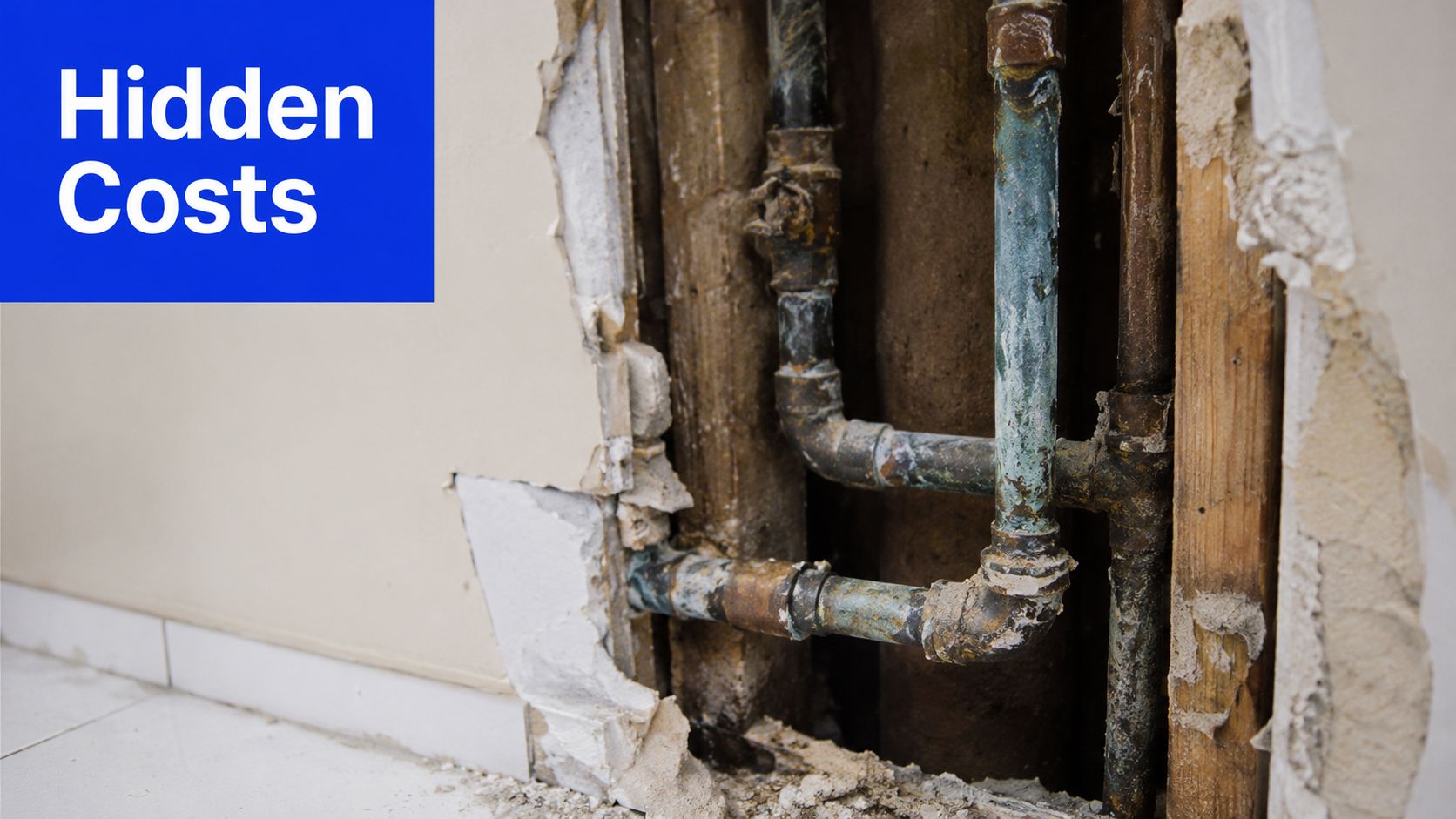
In older Melbourne homes, bathrooms were often built around a much simpler brief. Smaller vanities, tighter showers, less storage, and pipework run wherever it would fit at the time. After decades of patch repairs, extensions, and partial updates, you can open one wall and find mixed pipe materials, awkward waste lines, or old water damage that was never properly fixed.
That is why a simple cosmetic renovation can stop being cosmetic very quickly.
The biggest surprises usually show up after strip-out. Floor levels are wrong for the new shower. The toilet location does not suit current drainage falls. Wall framing has been cut around old pipework. If there has been a slow leak behind tiles or inside a wall, the repair bill often reaches beyond plumbing and into carpentry, sheeting, and waterproofing. If there are damp smells, staining, or unexplained swelling in walls or skirtings, water leak investigations can help confirm what you are dealing with before the renovation starts.
The local problem with moving wet areas
The hidden cost people miss most often is plumbing reconfiguration.
In Melbourne's west, that cost shows up hardest in older homes where the bathroom sits over timber floors, dated branch drains, or tight subfloor access. Shifting a shower 600 millimetres on a plan can mean new waste runs, altered water lines, floor penetration changes, and extra work to keep drainage falls legal and practical. Moving a toilet is usually the bigger decision. Toilets are less forgiving than vanities or tapware because the drainage point drives the layout.
That is why budgets in older homes can blow out by 20 to 30 percent when wet areas move. It is not just the plumber's time. It is the flow-on effect across demolition, carpentry, waterproofing, tiling, and compliance.
If you change where the water goes in or where the waste goes out, you are no longer pricing a simple bathroom update.
Layout changes can still be worth doing. Some old bathrooms are cramped, unsafe, or badly planned, and keeping a poor layout just to save money is not always smart. But homeowners should price those changes as structural service work, not as a styling choice.
Here's a useful walkthrough if you want to see how plumbing condition can affect renovation scope:
What to ask before you sign a quote
Ask what happens if the room opens up and the existing services do not suit the new plan.
Use questions like these:
- What plumbing changes are included: Confirm whether the quote allows for relocating fixtures, replacing old pipework, or altering drainage.
- What has been assumed behind the walls and under the floor: If there is rot, leak damage, or poor previous work, you need to know how variations will be priced.
- Does the layout rely on keeping the toilet, shower, and vanity where they are: That answer tells you very quickly whether two quotes are being priced on the same basis.
- Could the job trigger extra compliance or rectification work: Older homes can expose issues that have to be corrected once the room is opened.
Trades are not hiding these costs for fun. Old bathrooms hide problems well until the tiles are off and the actual condition is visible.
Your Renovation Timeline and Smart Savings Strategies
A bathroom renovation feels expensive partly because so many trades touch the same small room in a set order. If one stage slips, the rest follow it.
How the job usually unfolds
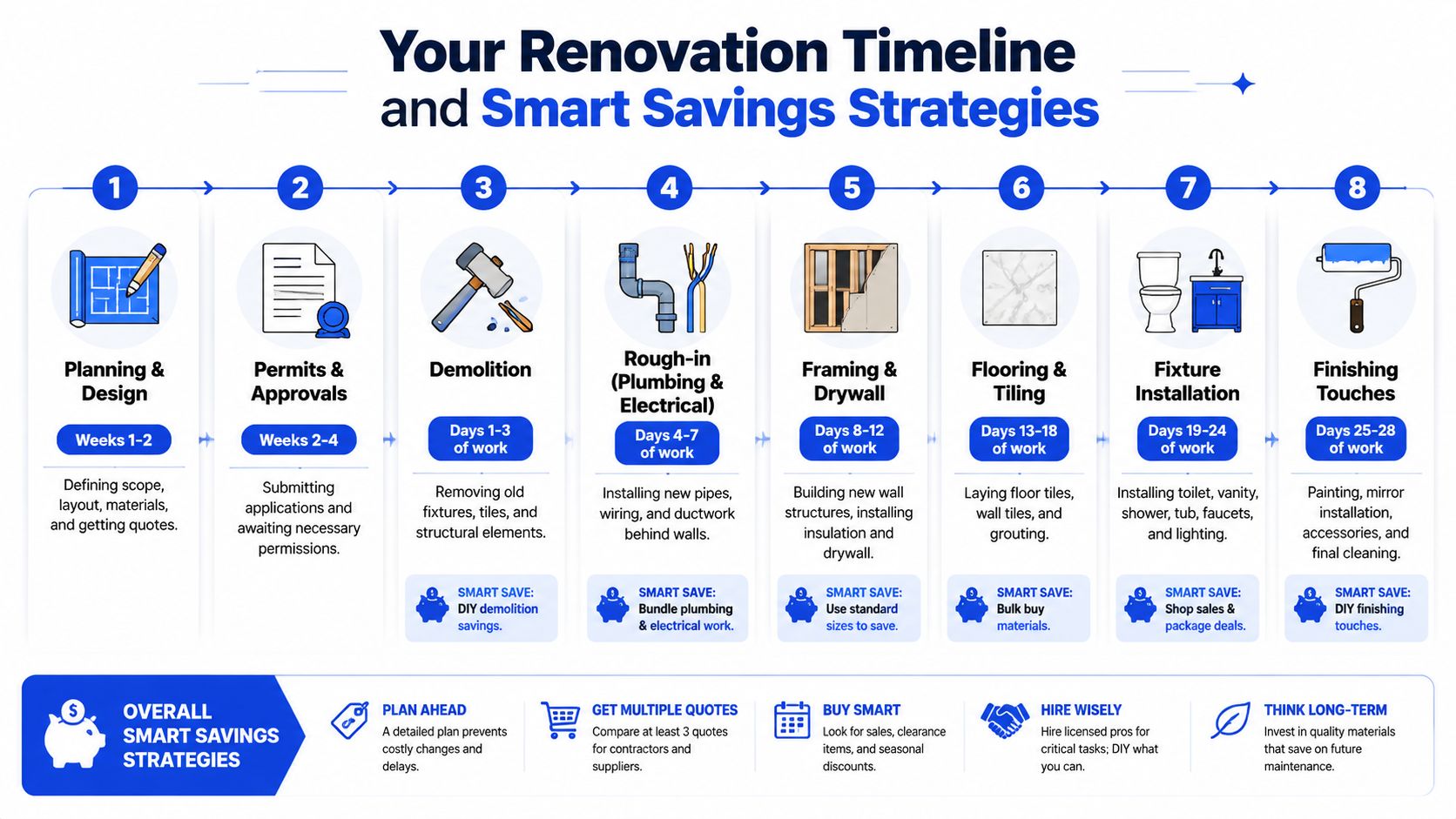
The early stage is planning. You lock in the layout, product selections, and scope before work begins. This is the stage that saves the most pain later.
Then the room gets demolished and stripped back. Once that's done, the rough-in starts. Plumbing and electrical work go in before surfaces are rebuilt. After that come waterproofing, tiling, and the slower detail work that gives the bathroom its finished look. Final fit-off happens last, when fixtures, tapware, screens, and accessories are installed and tested.
A typical sequence looks like this:
Planning and selections
Products, layout, quoting, and trade coordination.Demolition and removal
Old bathroom comes out, waste is removed, hidden issues are exposed.Rough-in work
Plumbing and electrical services are adjusted or renewed.Waterproofing and surface prep
The room gets properly prepared for wet-area use.Tiling and finishing surfaces
Floors, walls, trims, and grout are completed.Fit-off and testing
Fixtures are installed, seals checked, and the room is made operational.
A bathroom job runs best when every product is on site before demolition starts. Delays often come from waiting on one missing item.
Where to save money without creating trouble later
The best savings are strategic. They reduce unnecessary scope, not necessary quality.
Start with layout. Keeping the toilet, vanity, and shower in the same positions is usually the strongest cost-control decision you can make. It cuts down on pipe relocation, drainage changes, and time on site.
Then look at product choices. Mid-range fixtures from reliable brands often give better value than the cheapest options or the fully custom end of the market. You want parts that fit well, seal well, and can be serviced later.
Smart ways to reduce spend include:
- Keep the existing plumbing layout: This is the biggest saver on many projects.
- Choose standard-size fixtures: Off-the-shelf vanities and screens are often easier to install and replace.
- Do only non-licensed tasks yourself: Painting or accessory installation may be fine. Plumbing and waterproofing are not DIY territory.
- Buy with the whole room in mind: Chasing one bargain item can create fitting issues elsewhere.
- Plan finance before the room is offline: If cash flow is the sticking point, options like interest-free payments can help spread the cost without forcing poor decisions under pressure.
What doesn't save money is cutting corners on hidden work. Cheap waterproofing, rushed drainage, and poor-quality installation usually come back as defects, leaks, or premature replacement. That's not saving. That's deferring the bill.
Plan Your Project with a Professional Plumber
You finalise the tiles, order the vanity, and lock in a neat new layout. Then the walls come open in a 1970s brick veneer home in Melbourne's west and the actual job starts. Old galvanised pipe, poor falls on the waste line, no isolation points, and a toilet move that now needs more floor work than expected. That is where bathroom budgets get stretched, often by far more than homeowners planned for at the start.
A bathroom only performs as well as the plumbing behind it. In suburbs like Caroline Springs, St Albans, Taylors Hill, and the older pockets around Sunshine and Footscray, I regularly see renovation plans that look straightforward on paper but become more expensive once the existing services are exposed. Older homes are the biggest risk. Reconfiguring water and drainage in those properties can add 20 to 30 percent to the plumbing side of the job if the original layout does not suit the new design.
Bring a licensed plumber in before demolition if you plan to:
- Move the toilet, shower, bath, or vanity: Fixture relocations affect drainage, venting, water points, and floor set-out.
- Open up an older bathroom: Existing pipework may be undersized, corroded, badly patched, or in the wrong place for the new layout.
- Upgrade hot water connections: A new shower setup or larger bath can expose pressure, tempering, or capacity issues.
- Renovate for resale or long-term use: Compliance matters, but so does future access for servicing and repairs.
Early plumbing advice saves money in a very specific way. It tells you whether your proposed layout is practical before waterproofing, tiling, and cabinetry lock everything in. It also shows where the expensive parts are likely to be. Under-slab drainage changes, concrete cutting, replacing old pipework, and correcting non-compliant existing work are the items that catch homeowners out in Melbourne's western suburbs.
A good plumber is not there just to quote pipe runs. They should tell you when the design works, when it does not, and what changes will cut cost without compromising the finished room. Sometimes that means keeping the toilet where it is and putting the budget into better waterproofing, tapware, or ventilation instead.
If you're planning a bathroom renovation in Caroline Springs, Taylors Hill, or anywhere in Melbourne's western suburbs, Total Plumbing & Hot Water Systems can help with practical advice, compliant plumbing work, and clear quotes based on the actual site conditions.