





If a heat pump heater has an impressive efficiency label, why might it still disappoint on a cold Melbourne morning or leave you with a higher bill than expected?
The missing pieces are usually winter recovery, household demand and electricity pricing. A unit can perform well under test conditions yet struggle with back-to-back showers, restricted airflow or poorly chosen timer settings.
For homeowners in Caroline Springs, Taylors Hill and Melbourne's western suburbs, the useful question isn't whether heat pumps are efficient. It's whether the proposed system will deliver your hot water, at your busiest time, for a sensible installed and ongoing cost.
Table of Contents
- How a Heat Pump Water Heater Works
- Heat Pump vs Electric and Gas Systems Side by Side
- Winter Performance Noise and When Savings Fail
- Sizing the Tank and Recovery Rate for Your Household
- Rebates, Eligibility and Net Cost Before You Book
- Confirm the Right Unit and Quote Before You Book
How a Heat Pump Water Heater Works
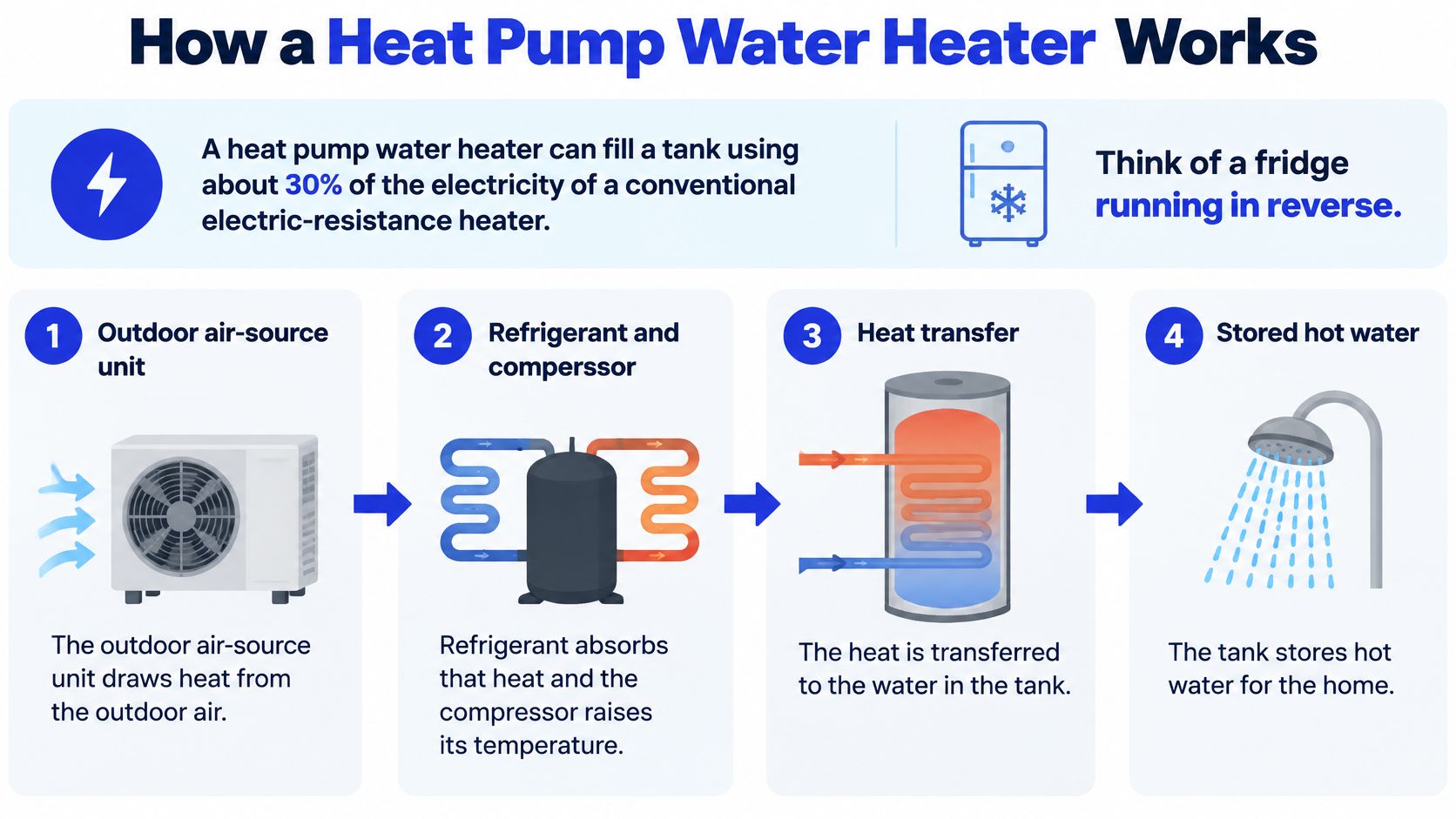
A heat pump water heater uses electricity to move heat from outdoor air into stored water, rather than relying entirely on an electric element. Think of a fridge running in reverse: your fridge moves heat out of its cabinet, while the water heater moves heat into its tank.
Outdoor air doesn't have to feel warm to contain useful heat. The refrigerant circuit can absorb heat at a low temperature, then raise its temperature so that heat can pass into the water.
Follow the heat through the system
- The outdoor unit draws in air. A fan passes outdoor air across a heat exchanger. The unit needs an unobstructed supply of air, not a tightly enclosed cupboard.
- Refrigerant absorbs heat. Refrigerant circulating through the system collects heat from that air.
- The compressor raises the temperature. Compressing the refrigerant makes it hot enough to transfer useful heat to the tank.
- The tank stores heated water. A heat exchanger transfers energy into the water, and insulation helps retain it until you open a tap.
The diagram follows that path from outdoor air to stored hot water.
The term coefficient of performance, often shortened to COP, compares heat delivered with electricity consumed. Because the appliance collects environmental heat, its heat output can exceed its electrical input. That's heat transfer, not free electricity.
Know what you're buying
A typical catalogue lists the heat-pump assembly, insulated storage tank and controller. Some models also include an electric booster, which provides extra heating when the controls call for it. Integrated units combine major components; split designs place them separately.
Eligible air-source heat-pump water heaters can receive certificates through the federal Small-scale Renewable Energy Scheme, as described in this Australian parliamentary document. Certificate eligibility doesn't establish whether a particular unit suits your home.
Before choosing a hot water system replacement, establish which components are included and how the booster operates. A small reserve facing heavy morning demand can require a very different operating pattern from a generously charged tank serving staggered showers.
Heat Pump vs Electric and Gas Systems Side by Side
| Factor | Heat pump | Electric resistance | Gas storage |
|---|---|---|---|
| Energy input | Ambient air heat plus electricity | Electricity through a resistance element | Natural gas or LPG |
| Relative electricity use | Lower through heat transfer | Reference system for comparison | Not a useful electricity-only comparison |
| Running cost compared with gas | Calculate using consumption and electricity tariff | Calculate using element consumption and tariff | Reference cost from gas consumption and tariff |
| Upfront cost | Higher than resistance; obtain a site-specific gas comparison | Usually simpler for a like-for-like replacement | Include gas connection and compliant installation work |
| Global-warming potential | Australian life-cycle research reported 57% lower than electric storage, according to ARENA | Baseline in that comparison | Requires a separate fuel and life-cycle assessment |
| Cold-weather output | Compressor capacity can fall; booster may assist | Element isn't reliant on collecting outdoor heat | Burner isn't reliant on collecting outdoor heat |
Read the table as a purchasing guide, not a ranking that applies to every home. Energy consumption and running cost aren't the same thing: consumption tells you how much energy the appliance uses, while the tariff determines what you pay for it.
Read the costs in the right order
Start with the energy input. An electric resistance heater turns purchased electricity directly into heat; a gas storage heater burns fuel; a heat pump uses electricity to collect and transfer environmental heat. Comparing gas and electricity only by the units printed on their bills won't produce a fair answer.
Next, examine the operating schedule. An efficient appliance heating during an expensive tariff period may deliver less financial benefit than expected. A resistance tank on an existing controlled-load arrangement also needs a more careful comparison than multiplying its consumption by your general household rate.
Upfront cost requires the complete installed scope. Access, pipework, electrical work and disposal can change the result, so appliance-only prices aren't enough.
Compare the cost of delivering your household's hot water, not just the price of the box.
Separate emissions from household savings
The life-cycle result in the table isn't a promise for every installation. Electricity generation, refrigerant, equipment life and installation conditions affect the emissions comparison. Rooftop solar can change the electricity supplied to the appliance, but it doesn't remove manufacturing or refrigerant considerations.
Cold-weather output matters differently across these technologies. Gas and resistance systems don't collect heat from outdoor air, although their storage tanks and incoming water still experience seasonal conditions.
If you're also investigating small electric instantaneous products, SouthRay Kitchen & Bath's 120 volt tankless water heater guide offers a useful comparison topic. Treat it as overseas product context, not an Australian electrical specification or a whole-house sizing recommendation.
For an existing gas installation, include any necessary gas fitting and line work in the comparison. Bring your current hot-water cost estimate, electricity tariff and household usage pattern to the quotation appointment.
Winter Performance Noise and When Savings Fail
Say your household finishes several showers on a cold morning in Taylors Hill. The stored hot water has been drawn down, the compressor is recovering the tank, and someone starts another shower. If demand exceeds recovery, an enabled booster may assist, increasing electricity consumption.
A winter assessment needs to consider the equipment's surroundings as well as its controls.
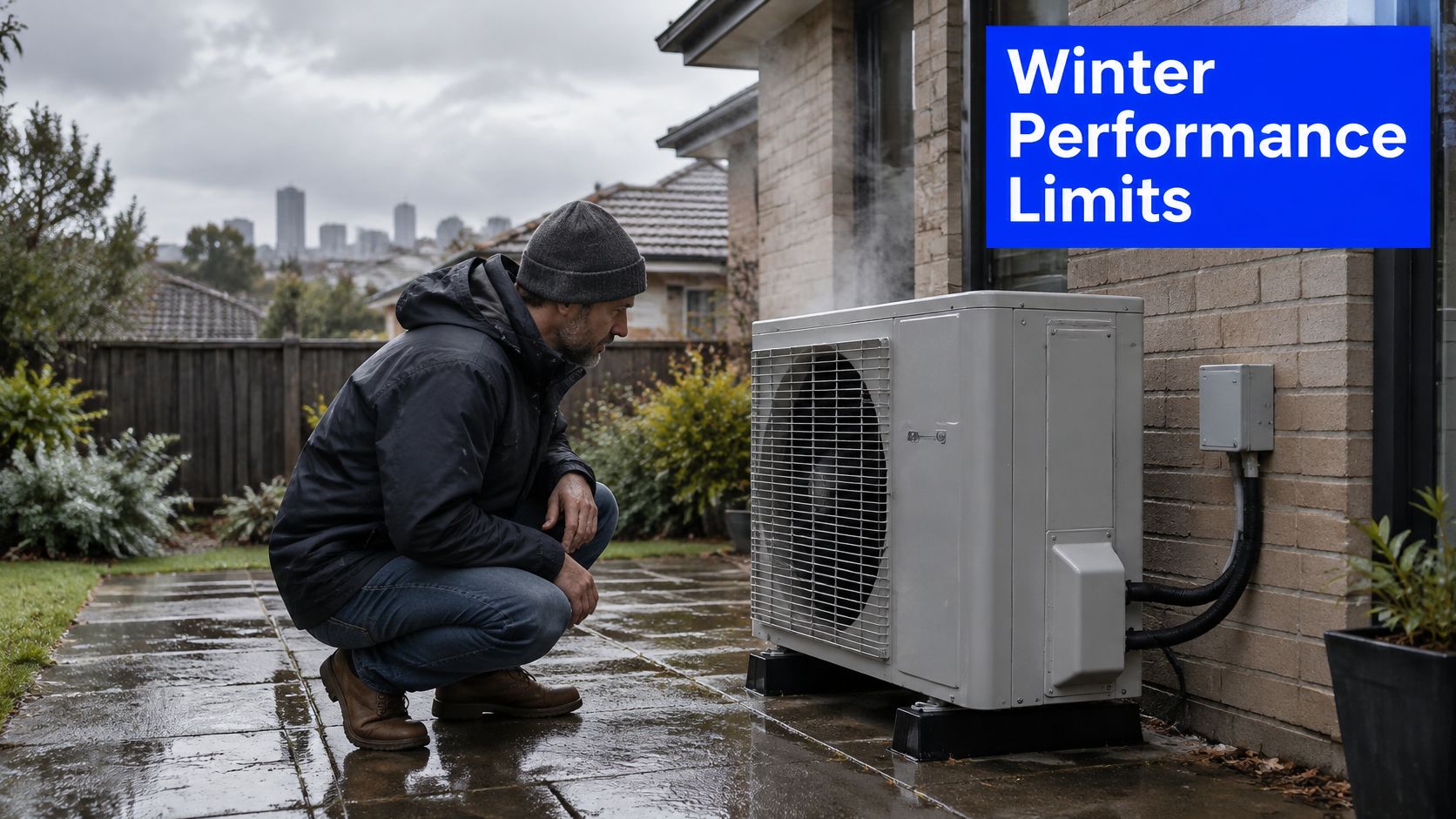
The Australian Government's hot-water guidance states that heat-pump systems typically use about 30% of the electricity consumed by conventional electric-resistance hot-water systems. That's a useful general comparison, not a guarantee for an individual winter morning.
Outdoor temperature, incoming water temperature, demand, storage temperature, defrost operation and tank losses all affect the result. Don't lower safety-related temperature settings to chase savings; have the installer explain the manufacturer's operating and sanitation requirements.
Test the location before approving it
A convenient patch beside the fence isn't automatically a suitable installation site. Check the following before accepting the layout:
- Airflow clearances. Follow the manufacturer's intake and discharge requirements. Avoid arrangements that repeatedly draw cold discharged air back into the unit.
- Water drainage. Provide a suitable route for condensate and defrost water, without creating slippery paths or persistent wet areas.
- Frost exposure. Have the installer assess the site and explain how the selected model handles cold conditions.
- Sound placement. Consider bedroom windows, neighbouring living areas and reflective walls. Request measured sound information at a stated distance, not just a description such as quiet.
A unit might comply with its installation clearances yet remain an irritating choice beside a bedroom. Sound power and sound pressure aren't interchangeable, so the quote should identify which measurement the manufacturer supplies.
This video provides additional context for discussing the equipment and installation with your installer.
Judge the bill under your actual routine
A timer can favour suitable daytime solar production or a cheaper electricity period, provided the tank retains enough hot water for later demand. Check whether the chosen schedule leaves adequate recovery before the morning rush. Cheap electricity isn't helpful if the household regularly runs out of usable water.
Winter reality check: A high COP on a label doesn't establish the lowest household bill.
Large simultaneous demand, restricted outdoor space and frequent booster operation deserve particular scrutiny. A rental also needs the appropriate owner approval. In an unsuitable installation, the running cost could exceed that of the system being replaced, so request a revised design or another system comparison rather than assuming electrification guarantees savings.
The Aussie Solar Info Victorian rebate guide reports that ministers agreed in December 2025 to introduce minimum energy-performance requirements for heat-pump water heaters. That regulatory direction doesn't replace a model-specific winter assessment or establish that every advertised unit suits Melbourne conditions.
Sizing the Tank and Recovery Rate for Your Household
Size for the busiest period, not the annual average. A household that spreads showers through the day can need a different system from a similar household that uses most of its hot water before leaving for work.
Storage volume is the water held in the tank. Recovery rate describes how quickly the equipment restores usable hot water after a draw. A larger tank isn't automatically better, and a smaller tank with an optimistic recovery claim isn't automatically economical.
Build a demand record
Use this routine before the site visit:
- Record the busiest shower period. Note who showers, the approximate duration and whether showers overlap. Include regular visitors or a predictable change in occupancy.
- Identify other hot-water draws. Check whether laundry appliances and the dishwasher draw from the hot-water supply. Don't add a dishwasher's full water consumption if it heats cold inlet water internally.
- Describe the pattern rather than guessing litres. Write whether demand is staggered, concentrated in the morning, or shared between morning and evening. Mark baths and overlapping showers separately.
- Request winter recovery evidence. Ask for performance at the expected winter air and inlet-water conditions, with the stated tank temperature and booster assumptions.
Don't accept a household-size label as the entire calculation. Shower flow, duration and timing can matter as much as the number of occupants.
Balance reserve against cost
Undersizing can leave the household dependent on supplementary heating during busy periods. Oversizing increases the purchase commitment and may add standing heat losses. The aim is enough usable storage and recovery for your routine, not the largest tank that fits beside the house.
The Australian Government's household energy upgrades material describes indicative heat-pump payback periods of four to six years in some assessments against ordinary gas systems. Treat that as context, not a household forecast: tariffs, consumption, climate, sizing and controls change the calculation.
Write down your peak demand pattern and require the proposed winter recovery rate on the quote.
If daytime heating is proposed, have the installer demonstrate that the stored reserve covers evening demand without sacrificing the following morning's supply. That turns a general efficiency discussion into a practical design decision.
Rebates, Eligibility and Net Cost Before You Book
| Incentive | Indicative amount | Main conditions |
|---|---|---|
| Victorian Energy Upgrades, electric system replaced | Up to $630 | Approved product and installer, eligible replacement system |
| Victorian Energy Upgrades, gas system replaced | Up to $560 | Approved product and installer, eligible replacement system |
| Solar Homes hot-water rebate | Up to $1,000, or up to $1,400 for an eligible locally made product | Generally an existing owner-occupied home, combined owner taxable income below $150,000, property value under $3 million, replaced system at least three years old |
Confirm every indicative amount and eligibility test in the table against the current Solar Victoria program requirements before relying on it. These aren't universal cash discounts, and different programs have different conditions.
Establish eligibility before budgeting around a maximum rebate. A rental, new build or property that has already received a Solar Homes hot-water rebate may not qualify for that assistance. Don't assume that failing a Solar Homes condition rules out every other incentive.
Turn the advertised offer into a net quote
Start with the full installed price before incentives. It should identify the appliance, labour and required plumbing and electrical work, rather than hiding necessary upgrades behind a standard-installation headline.
Then separate the deductions:
- Electric replacement scenario. Full installed quote, less the approved electric-replacement discount, less any separately confirmed Solar Homes entitlement, equals the amount payable.
- Gas replacement scenario. Full installed quote, less the approved gas-replacement discount, less any separately confirmed Solar Homes entitlement, equals the amount payable.
- Ineligible household scenario. Full installed quote, less only the incentives approved for that property, equals the amount payable.
These are calculation methods, not promises that the maximum amounts can be added together. Product approval, installer requirements, program availability and the order in which incentives are calculated can change the final deduction.
Keep funding separate from affordability
Electrical or plumbing upgrades don't automatically disqualify a household, but they can increase the amount payable. Ask whether switchboard work, a new circuit, relocation or drainage is included before comparing offers.
If you're considering interest-free payment options, check the repayment terms separately from the incentive calculation. Financing affects when you pay; it doesn't establish the appliance's running cost or eligibility.
Before booking, put installed quote, confirmed incentives and estimated annual running cost together on the same comparison sheet. Obtain the incentive assumptions and any outstanding approvals in writing so that an advertised saving doesn't become an unexpected invoice.
Confirm the Right Unit and Quote Before You Book
A useful quote should let you compare the proposed system with another offer without guessing what either installer has included. The model number matters, but so do the installation layout, control settings and assumptions behind the running-cost estimate.
Keep the essential documents together before authorising the changeover.
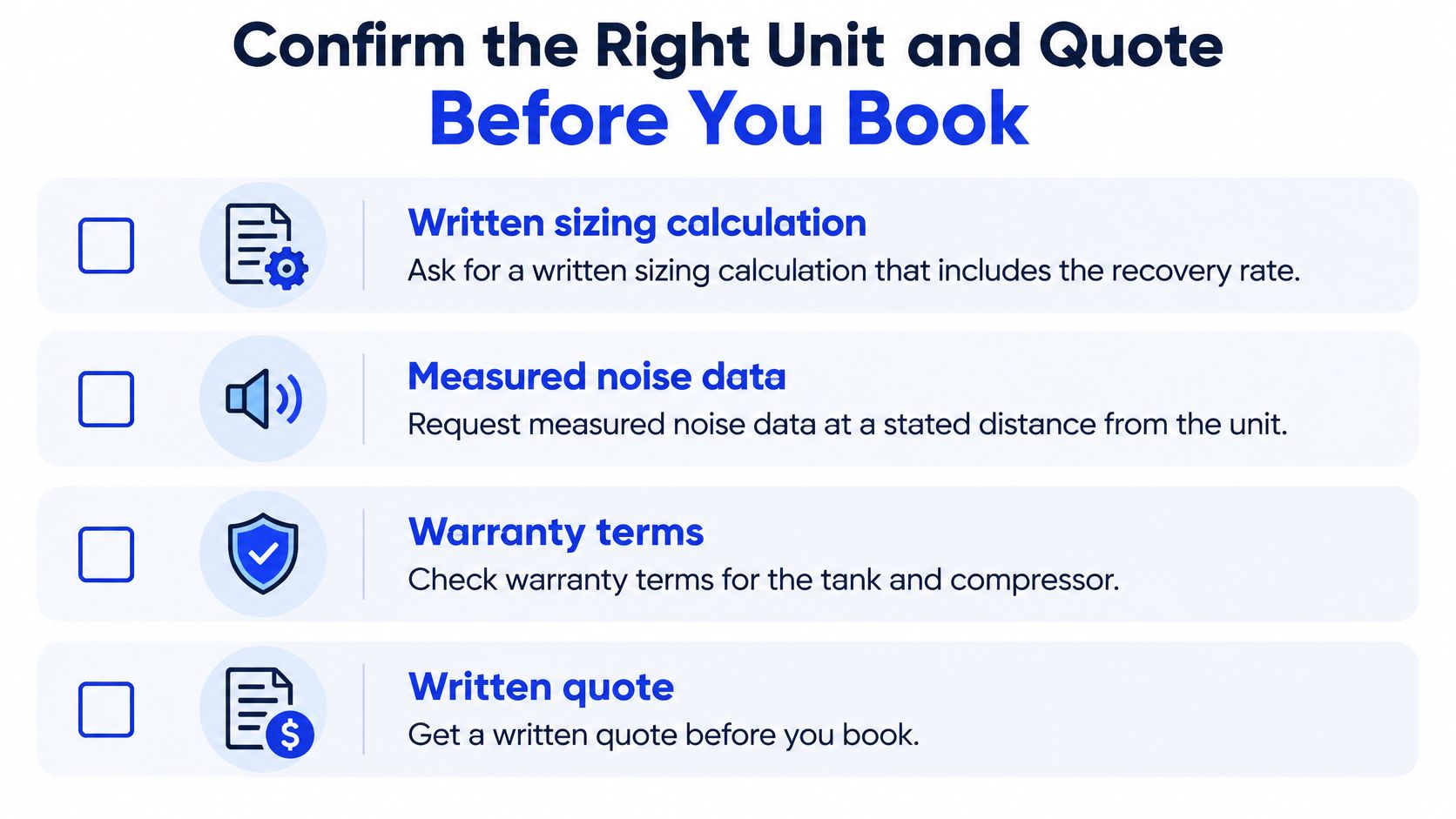
Take this checklist to the installer
- Written sizing calculation. Request the demand assumptions, usable storage and winter recovery information. An answer based only on bedroom count doesn't describe how your household uses water.
- Measured noise information. Keep the manufacturer's acoustic document with the proposed site layout. Confirm the measurement type, stated distance and likely effect of nearby walls.
- Tank and compressor warranties. Read each component's terms, including labour coverage, maintenance obligations and exclusions. A prominent warranty headline may not describe every part of the system.
- Booster controls and timer settings. Have the installer identify the default schedule, permitted user adjustments and what happens after unusually heavy use. Ask which settings must remain enabled for safe operation.
- Annual running-cost estimate. Require the electricity rate, assumed consumption, heating schedule and solar assumptions used in the calculation. A dollar estimate without those inputs isn't a meaningful comparison.
- Itemised upfront quote. Keep appliance and installation charges distinct from incentives. Confirm whether the price includes electrical work, valves, drainage, access requirements and any gas disconnection work.
- Removal and disposal. Make responsibility for the old tank explicit. At Total Plumbing & Hot Water Systems, we take away the old unit when we replace a hot water system.
- Changeover arrangements. Confirm the installation date, expected interruption and what happens if site conditions require extra work. Don't treat a preferred date as a confirmed booking.
Check the handover, not just the installation
Before the installer leaves, ask for a demonstration of the controller and a copy of the operating instructions. Photograph the agreed timer settings and keep the model and serial details with the invoice. That gives you a clear starting point if household demand changes or a fault develops.
Ask how to distinguish ordinary operation from a problem. Compressor operation, fan noise and condensate can be normal, while persistent alarms or repeated loss of hot water need investigation. Use the manufacturer's fault instructions rather than repeatedly resetting the appliance.
For landlords and property managers, VerticalRent's rental property water heater replacement guide is a useful planning resource for coordinating replacement and tenant communication. Apply Victorian requirements and local professional advice rather than importing overseas legal or installation rules.
Choose a quote you can verify
For homes in Caroline Springs, Taylors Hill and Melbourne's western suburbs, we work on all makes and models of gas and electric hot water units at Total Plumbing & Hot Water Systems, and we offer upfront pricing. Bring your electricity tariff, current system details and hot-water routine so the proposed changeover can be assessed against the way your home operates.
The strongest proposal isn't necessarily the cheapest appliance or the most impressive label. It's the written offer that explains how the equipment will meet your demand, where it will sit and what you'll pay.
Total Plumbing & Hot Water Systems offers hot water repairs and installations, upfront pricing and removal of the old unit when it's replaced. To discuss whether a heat pump heater suits your home, call 0418 550 372 or visit Total Plumbing & Hot Water Systems to request a quote. Have your electricity tariff and busiest hot-water routine ready so we can discuss the changeover on practical terms.