





You usually find out you need a hot water replacement at the worst possible time. Early shower before work. Kids getting ready for school. Dishwasher half loaded. Then the water runs cold, turns rusty, starts leaking, or the pilot won't stay on. Around Caroline Springs, Taylors Hill, Melton and the wider western suburbs, that call tends to come with stress because nobody wants to sort out plumbing under pressure.
The problem is most advice online talks about the unit only. It tells you gas or electric, tank or continuous flow, maybe a rough product range, and leaves out the items that significantly drive up the quote. Licensed installation, compliance, venting changes, electrical work, disposal of the old unit, valve upgrades, access issues, and the little site-specific items that aren't optional once the job starts.
That's where homeowners get caught. They think they're comparing one hot water system to another, when they're really comparing one complete replacement scope to another.
Table of Contents
- Your Guide to Hot Water Replacement in Melbourne
- Seven Signs Your Hot Water System Needs Replacing
- Choosing Your New System Gas vs Electric and Tank vs Continuous Flow
- The True Cost of Water Heater Replacement in 2026
- What to Expect on Replacement Day A Step-by-Step Timeline
- DIY Dangers vs Professional Peace of Mind
- Water Heater Replacement FAQs
Your Guide to Hot Water Replacement in Melbourne
A lot of hot water failures in the western suburbs follow the same pattern. The system has been “a bit funny” for weeks. Maybe it's taken longer to heat. Maybe the water has gone hot and cold. Maybe there's been a damp patch near the base that everyone hoped was nothing. Then one morning, it gives up properly.
That's the moment individuals start searching for answers, and what they need isn't fluff. They need to know whether the system can be repaired, what replacement involves, and why one quote can look clean and simple while another looks messy and expensive.

In Melbourne's West, the right answer depends on more than brand and size. It depends on where the unit sits, whether you're on gas or electric now, whether the flue setup can stay, whether the existing pipework is worth keeping, and whether the household wants the cheapest short-term fix or a smarter long-term changeover. Homeowners looking at hot water system services in Melbourne's West are usually trying to solve all of that at once.
A good replacement feels boring once it's finished. Hot water turns on, pressure is stable, the temperature is right, and there are no surprises on the invoice.
The aim is simple. Get you from failed system to working system without guessing, without unsafe shortcuts, and without pretending the final bill is just the sticker price on the unit.
Seven Signs Your Hot Water System Needs Replacing
Some hot water faults are repair jobs. Others are the system telling you it's at the end of the road. The trick is knowing the difference before you spend money twice.
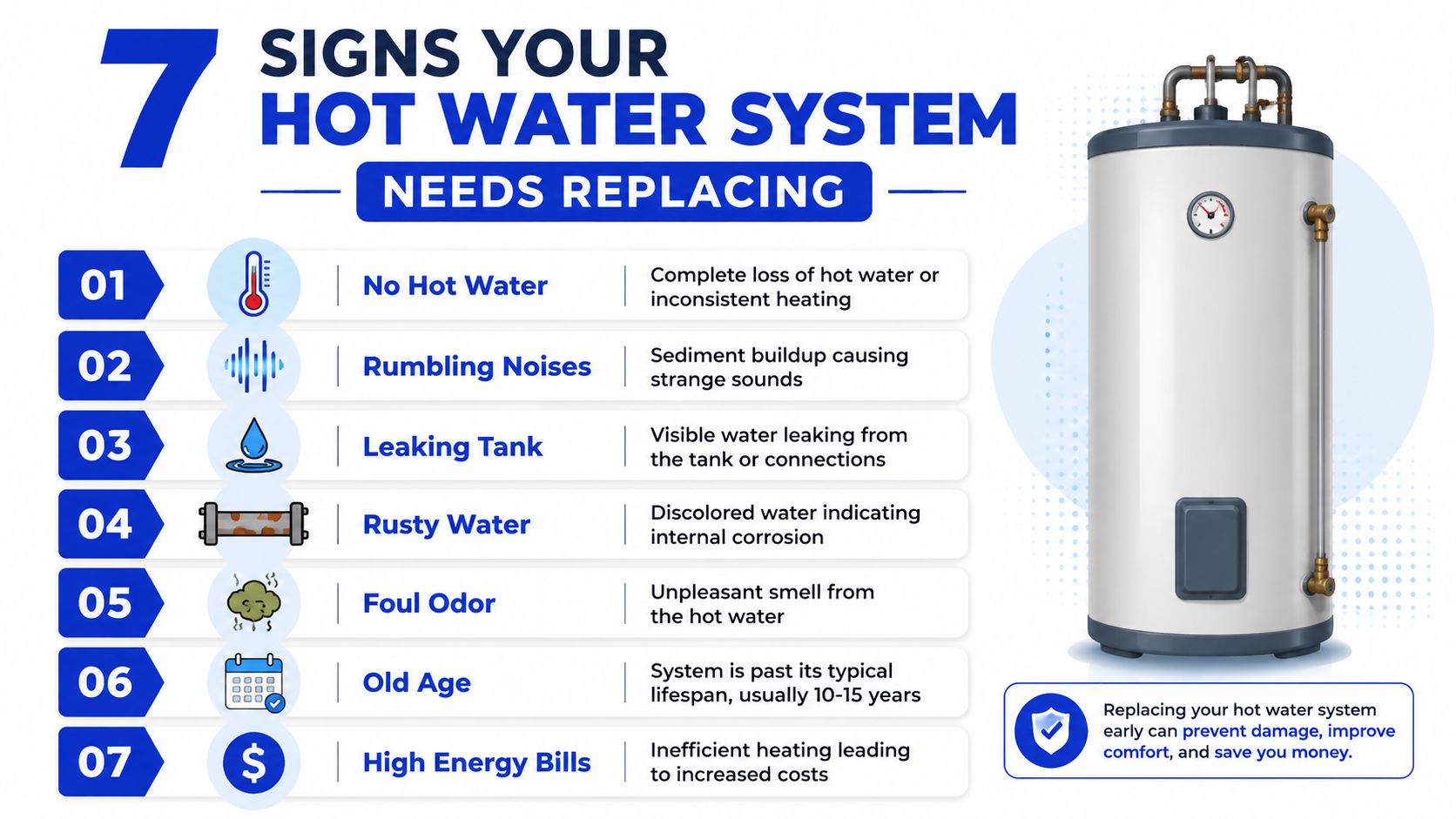
When poor performance becomes a replacement issue
Start with the obvious one. No hot water or wildly inconsistent hot water. If the system can't reliably do the one job it exists to do, it may still be repairable, but not always economically. A failed element, thermostat or ignition component can be straightforward. A tank that's corroded internally is not.
Then there's rumbling or banging noises. That often points to sediment buildup in storage units. Once sediment hardens, the heater has to work harder, heat transfer gets worse, and components cop more stress. The unit might still run, but it won't run well.
Rusty or discoloured hot water is one that homeowners should take seriously. Brown or rusty water from the hot side can mean internal corrosion in the tank or fittings. If the vessel itself is corroding from the inside, you're not looking at a cosmetic issue.
A visible leak around the tank base is another major warning sign. A loose connection or valve can sometimes be repaired. Water coming from the tank body itself usually means replacement is the sensible path.
Here's a quick checklist of the signs that most often point toward replacement:
- Complete loss of service: No hot water, or it runs out unusually fast.
- Strange operating sounds: Rumbling, popping, or knocking from the cylinder.
- Visible leakage: Moisture, pooling, or active drips near the tank.
- Water quality changes: Rust tint, cloudy hot water, or debris.
- Bad smell from the hot side: That can indicate water quality or internal issues that need proper diagnosis.
- Bills creeping up: If the system is working harder to deliver less, inefficiency may be part of the problem.
- The unit is old and unreliable: Age matters, but only alongside performance and condition.
A short visual guide can help if you're comparing symptoms at home:
What matters more than age alone
Much online advice goes wrong on this specific point. People get told to replace a system purely because it has hit a certain birthday. That's too simplistic. Guidance from A. O. Smith's installation guide notes that storage systems are commonly set to about 49°C for energy savings, and that age alone isn't a reliable replacement trigger. The better test is the gap between your current unit's efficiency and the proposed replacement, plus whether the old unit still meets your household's demand safely and reliably.
Practical rule: If the tank is leaking, the water is rusting from the hot side, or the heater has become unreliable enough that you're planning around it, stop thinking in terms of patch jobs.
In the western suburbs, I'd add one more practical sign. If your heater is in a tight cupboard, garage corner, or side passage and every repair starts with “we can try”, replacement often becomes the cleaner, cheaper decision over the next few years.
Choosing Your New System Gas vs Electric and Tank vs Continuous Flow
A lot of homeowners in Melbourne's West replace hot water under pressure. The old unit fails, the shower goes cold, and the first quote that sounds reasonable gets the nod. That is exactly how people end up with a system that costs more to run, struggles at peak times, or triggers extra upgrade work they were never warned about.
The better approach is to choose the replacement around the house, not around the old badge on the tank. A like-for-like swap can still be the right call. It is not automatically the smart one.
Storage versus continuous flow in plain English
A storage system keeps a volume of hot water ready to go. That suits households with predictable usage, especially where two bathrooms, the kitchen, and the laundry can all get used in the same window.
A continuous flow system heats water as you use it. That saves floor space and avoids storing a full tank all day, but the unit, gas supply, or electrical supply has to be sized properly. If it is undersized, people feel it straight away.
Fuel choice matters just as much as the delivery style. The four common replacement paths are:
- Gas storage
- Electric storage
- Gas continuous flow
- Electric continuous flow
In the western suburbs, the decision often comes down to what the property can support without hidden add-ons. A gas-to-gas swap may still need flue changes, valve upgrades, or work to the gas supply. If you are changing gas appliances or reviewing the supply at the same time, licensed gas fitting and gas line work may be part of the job.
How the four main options compare
| System Type | Upfront Cost | Typical Running Cost | Best For… | Key Consideration |
|---|---|---|---|---|
| Gas Storage | Moderate | Varies with gas use and standing losses | Homes already set up for gas storage and straightforward like-for-like swaps | Older flue arrangements can complicate replacement |
| Electric Storage | Often simpler on install where electric supply suits | Depends heavily on tariff and household usage pattern | Smaller homes, simple replacements, properties moving away from gas | Storage losses still matter |
| Gas Continuous Flow | Moderate to higher depending on site | Can be efficient for on-demand use | Households wanting endless hot water without a tank footprint | Gas line sizing and venting must be right |
| Electric Continuous Flow | Site dependent | Depends on electrical demand and tariff | Specific property setups with suitable electrical capacity | Electrical upgrade requirements can be significant |
What usually works best in Melbourne's West
There is no universal winner. A four-bedroom home in Caroline Springs with back-to-back morning showers has different needs from a villa unit in Yarraville or a rental in Werribee.
Here is what tends to play out on real jobs.
- Gas storage often suits homes that already have a compliant gas setup, enough space, and a usage pattern that suits stored hot water. If the old system lasted well and the household was happy with performance, this can be the cleanest replacement path.
- Gas continuous flow is a good fit where space is tight and the household wants long showers without worrying about running out. The catch is the supply side. Gas rate, pipe sizing, and flue requirements have to stack up.
- Electric storage can suit smaller households or owners planning to reduce gas use over time. The tariff matters. So does recovery time. Cheap overnight heating is one thing. Running short on hot water at 7 pm is another.
- Electric continuous flow is usually the most property-dependent option. I only recommend it when the electrical capacity is there or the client already expects switchboard or supply upgrades.
One mistake shows up again and again. People compare unit prices instead of replacement outcomes. A cheaper heater can become the expensive choice once compliant installation work is added, especially in older western suburbs homes where services were installed years ago and current rules are tighter.
The right system is the one that matches your demand, your site, and your longer-term plans for the property. Get that part right, and the quote makes sense. Get it wrong, and even a good brand can feel like a bad decision within a year.
The True Cost of Water Heater Replacement in 2026
This is often the first detail sought. Fair enough. When the hot water is down, you want a number. The problem is a lot of advertised prices aren't replacement prices. They're hardware prices.
In real jobs across Melbourne's West, water heater replacement cost is the sum of the unit plus everything needed to install it safely, legally and properly at your property. That's why two homes can choose the same model and end up with very different quotes.
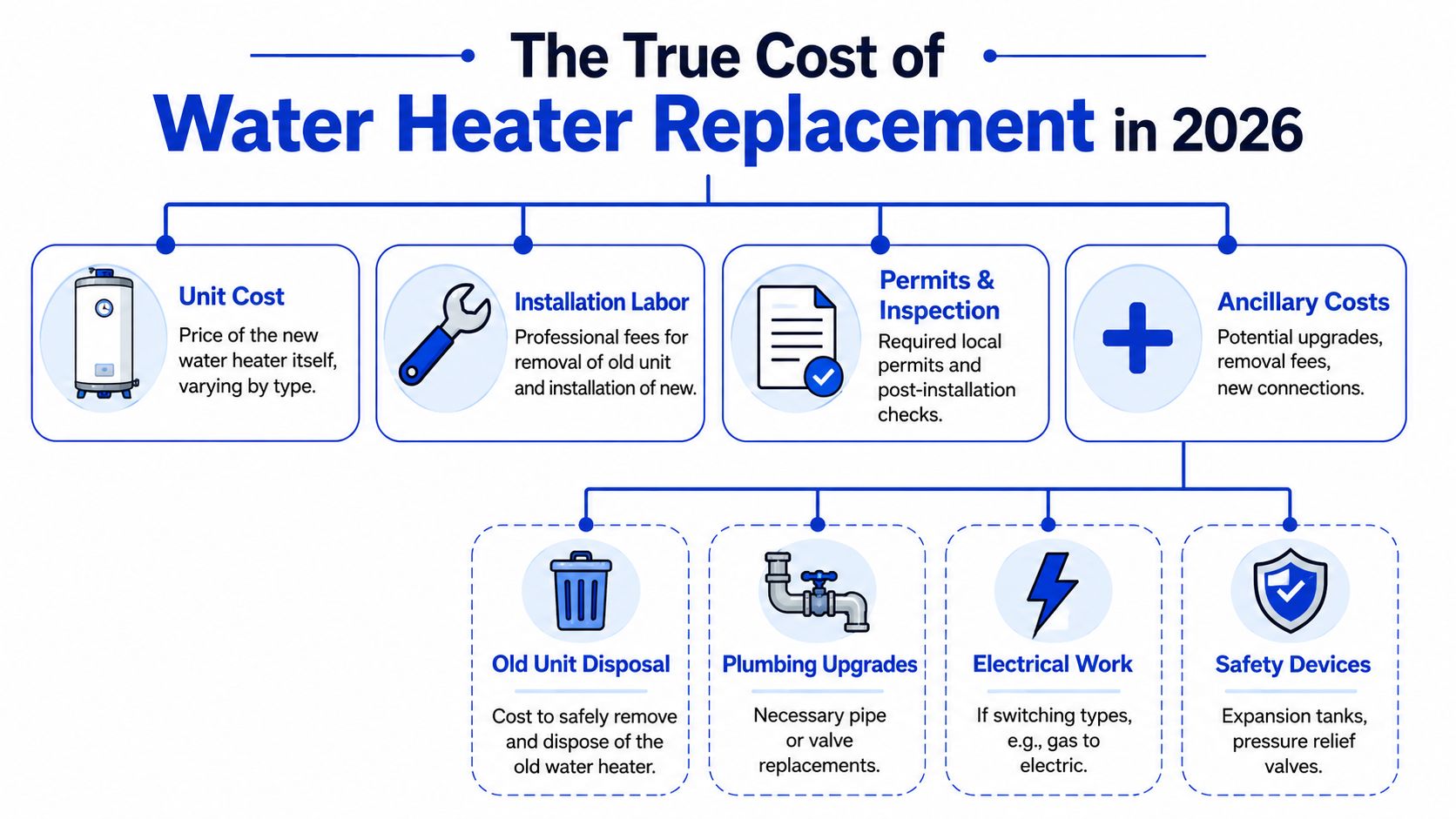
What a proper quote should include
A complete quote usually has several moving parts:
- The unit itself: Brand, model, fuel type, capacity and efficiency level.
- Licensed labour: Plumbing, gas fitting, and electrical work where needed.
- Removal of the old system: Disconnecting, handling, and taking the old unit away.
- Site-specific materials: Valves, pipework, fittings, trays, connectors, or wiring changes.
- Compliance items: Work that must be carried out to meet current requirements, not old standards.
- Access conditions: Tight cupboards, stairs, awkward side paths, roof flues, or confined plant areas.
Australian consumer advice often leaves out these extras, but they're not optional. As noted in this discussion of replacement cost in Australia, the true bill needs to include permits, licensed installation, and site-specific upgrade work, and Victorian rules require licensed practitioners. If you're comparing local options, it helps to look at a provider that already handles hot water system replacements in Melton and surrounding suburbs as complete jobs rather than unit-only sales.
Why cheap quotes often grow mid-job
The usual blowouts happen after the old unit comes out. That's when someone finds the valves are shot, the base is no good, the pressure control isn't right, the electrical supply doesn't suit the new heater, or the gas setup needs more work than expected.
This doesn't mean every higher quote is fair. It does mean the cheapest quote on page one can be the least honest if it ignores the full scope.
A reliable quote should answer these questions clearly:
- Who is doing the licensed work? If that's vague, be cautious.
- What happens to the old unit? Removal should be spelled out.
- What compliance items are included? Don't assume.
- What site upgrades might be needed? A good plumber flags likely issues early.
- Is the quoted system suitable for the property? The wrong recommendation is expensive even if the price looks low.
Cheap hardware pricing is easy to advertise. A compliant replacement price takes more honesty because it includes the bits homeowners can't see.
If the replacement is unexpected, payment flexibility matters too. Plenty of households prefer staged payment options or interest-free plans when a failure lands at the wrong time. That's not a technical issue, but it does affect what's realistic on the day.
What to Expect on Replacement Day A Step-by-Step Timeline
Homeowners are usually less worried about the plumbing than the disruption. They want to know how long the water will be off, whether the house will be left in a mess, and what happens between “the plumber has arrived” and “the shower is hot again”.
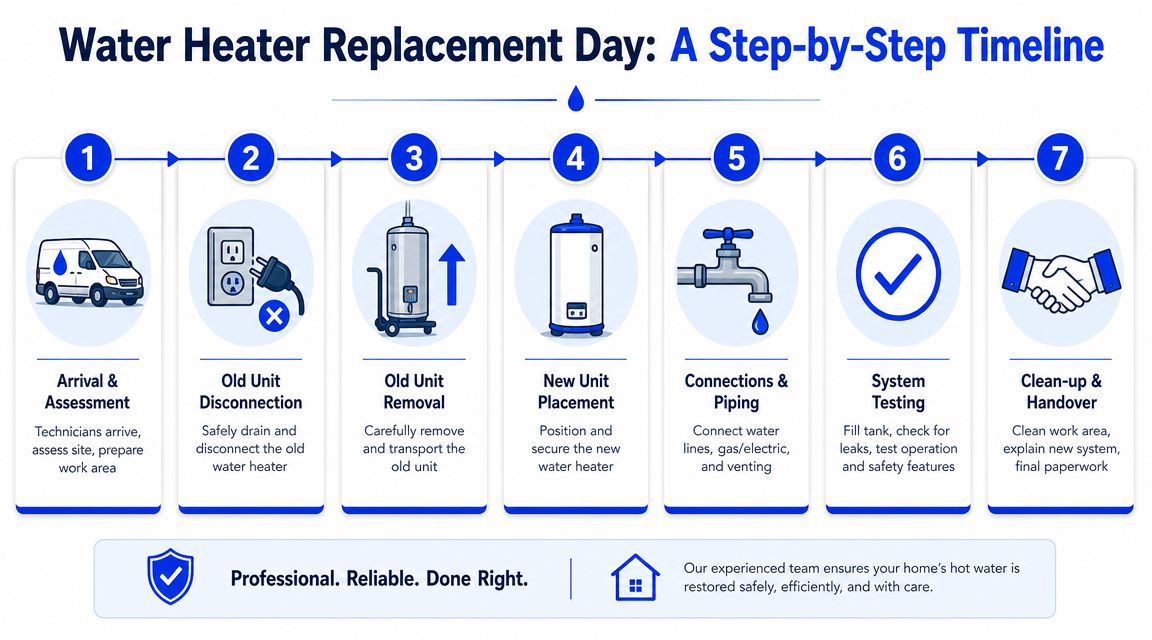
Before the old unit comes out
A proper replacement starts with a site check, even if the system type seems obvious. The installer confirms the model, services, access path, shut-offs, and any constraints around the cupboard, garage, side lane or outdoor slab. Floors and nearby surfaces should be protected before tools come in.
Then the old unit is isolated, drained where required, and disconnected safely. On gas jobs, this isn't just appliance removal. In many replacements, especially with older gas storage heaters, the venting arrangement is part of the actual job scope.
Industry guidance points out that a water-heater swap is often a combustion-system retrofit. When older gas units are replaced with newer high-efficiency or continuous-flow systems, legacy chimney or B-vent arrangements may need to be replaced with direct-vent materials such as PVC, CPVC or ABS. The installer should verify flue length, termination clearance and combustion-air availability before selecting the heater, particularly in tight or enclosed locations, as explained in Consulting-Specifying Engineer's guidance on water heater specifications.
Installation testing and handover
Once the old heater is out, the new unit is positioned and connected. That includes water lines, isolation points, relief components, energy supply, and venting if the system uses combustion. The neatness of this part matters. Good pipework isn't just for looks. It makes future servicing easier and reduces the chance of strain, leaks or awkward access.
After connection, the system is filled, purged, checked, and commissioned. That means looking for leaks, verifying operation, confirming controls work correctly, and making sure the temperature and pressure side of the installation is right for the unit and site.
Typical same-day flow looks like this:
- Arrival and inspection: Confirm scope and protect the work area.
- Safe isolation: Shut down water, gas, or electricity as required.
- Removal: Disconnect and take out the old system.
- Placement: Fit and secure the new heater in position.
- Connection work: Complete pipe, power, gas and venting tasks.
- Testing: Check for leaks and confirm proper operation.
- Clean-up and handover: Remove rubbish, explain the system, finalise paperwork.
By the end, you should know how the heater operates, where the isolation points are, and what to watch in the first day or two. The site should be left clean, and the old unit should be gone.
DIY Dangers vs Professional Peace of Mind
The apparent simplicity of a hot water swap hides the parts that cause trouble later. In Melbourne's west, I've seen plenty of jobs where the unit itself was fine, but the replacement around it was rushed, underquoted, or done by someone who was not licensed for the full scope. That is how a cheap install turns into a leak in the wall, a failed compliance check, or a warranty argument six months later.
The risk is rarely one dramatic mistake. It is a handful of smaller misses. Wrong valve setup. Poor pipe support. Inadequate clearances. Gas work that was connected but not properly checked. Electrical work that should have involved a licensed sparky. Any one of those can remain undetected until heat, pressure, daily use, or a property sale brings it to the surface.
What can go wrong fast
Water damage is usually the first thing people understand because they can see it. A poor connection can drip into plaster, flooring, cabinets, or skirting for weeks before anyone notices. By the time the stain appears, the repair bill is no longer about the heater.
Gas replacements carry a different level of risk. If the connection, ventilation, flue arrangement, or commissioning is wrong, the issue is not just performance. It is household safety. That is why licensed gasfitting, correct testing, and paperwork matter.
Electric systems still need care. A straight swap is one thing. A change in system type, load, controls, or tariff setup can trigger electrical work that has to be done properly and signed off by the right trade.
The practical problems show up in the same places again and again:
- Insurance claims can get sticky: If unlicensed or non-compliant work is involved, the paperwork becomes part of the problem.
- Manufacturer warranties can be challenged: Good brands still expect correct installation, suitable valves, and proper commissioning.
- House sales can stall: Non-compliant plumbing and gas work has a habit of appearing during building and pest checks or conveyancing questions.
- Rebate applications can fall over: If the job does not meet the scheme rules or the installer details are wrong, the household can miss out.
Why paying for licensed, compliant work saves grief
This is the part plenty of quote pages skip. The actual price of a replacement is not just the box on the floor. It is the licensed labour, compliance obligations, safe disconnection, correct reconnection, testing, old unit removal, and the paperwork that proves the job was done properly.
That matters even more in the western suburbs, where I regularly see older homes with tight access, dated pipework, patched-up tempering valves, and gas services that have already had a few changes over the years. A unit-only price does not account for any of that. An all-inclusive replacement price does.
As noted earlier, policy settings and rebate programs influence what people install next. That makes compliant installation even more important because the savings people expect can depend on the job being done by the book.
What you are buying with a licensed professional is not a nicer-looking invoice. You are buying a heater that suits the site, a job that meets the rules, and a clear answer if anything needs attention later. In my trade, that is what peace of mind looks like.
Water Heater Replacement FAQs
How long does a replacement usually take?
A straightforward like-for-like changeover is often completed the same day. If the job involves switching fuel type, changing venting, or upgrading services, it can take longer. Access also matters. A garage install is one thing. A tight internal cupboard is another.
Can I just replace my old system with the same type?
Sometimes yes. Sometimes that's the wrong move. Like-for-like works well when the existing services, location and household demand still make sense. If your running costs are poor, your gas setup is dated, or you're planning partial electrification, it's worth reassessing before locking in the same style again.
Should I replace based on age alone?
No. Performance, efficiency, reliability and condition tell you more than the birth date on the compliance plate. A system that still operates properly may not need replacement just because it's older. A newer one that leaks, corrodes, or can't meet demand can still be the wrong unit to keep.
Can I upgrade to a larger tank?
Yes, but bigger isn't automatically better. You need enough hot water for peak demand without paying to store more hot water than the household uses. The right answer depends on bathrooms, occupants, usage habits, tariff structure, and available installation space.
What maintenance does a new system need?
Keep an eye on changes in water temperature, pressure, noise, and any visible moisture around the unit. If something changes, get it checked early. Most expensive hot water jobs start as small symptoms people put off.
What brands should I choose?
Good brands matter, but matching the brand to the job matters more. A well-supported Rinnai, Rheem, Dux or similar unit installed correctly will generally serve better than a fancy model that doesn't suit the property. The best recommendation comes after the site is assessed, not before.
If your hot water has failed and you want a straight answer on replacement options, costs, and what's required for a compliant install, speak with Total Plumbing & Hot Water Systems. They service Caroline Springs, Taylors Hill, Melton and Melbourne's western suburbs with same-day hot water changeovers, clear pricing, licensed workmanship, and practical advice that won't leave you guessing.