




You notice it first at the kitchen sink. The water still drains, but it takes a little longer than it did last week. Then the shower starts leaving water around your ankles, or the washing machine empties and the laundry floor waste answers with a hollow gurgle. These signs are easy to dismiss because the drain hasn't overflowed yet.
A drain is a gravity-fed pipe designed to move water and small suspended waste through a reasonably smooth passage. A blockage develops when grease, hair, paper, roots, silt or another obstruction narrows that passage. The right fix depends on which drainage system is affected, who owns the blocked section and whether the obstruction is close to a fixture or buried outside.
Table of Contents
- The Moment You Notice Something Is Off
- What Blocks Kitchen and Laundry Drains
- What Blocks Bathroom Shower, Basin and Toilet Drains
- Outdoor Sewer and Stormwater Blockages Explained
- Warning Signs and Immediate Checks You Can Safely Do
- Simple Habits That Prevent Blocked Drains
- Risks of Waiting Too Long and When to Call a Licensed Plumber
The Moment You Notice Something Is Off
A Melbourne home usually has three practical plumbing zones. Kitchen and laundry greywater carries water containing grease, food residue, lint and detergent. Bathroom soil and waste pipes handle toilet discharge, shower water and basin waste. Outdoor stormwater takes rain from roofs, gutters, pits and paved areas, and it must be treated separately from the sanitary sewer system.
A slow kitchen sink normally points to a local restriction in the trap or nearby branch pipe. An isolated toilet that rises and drains slowly may have an obstruction in its pan or short waste connection. The situation changes when several fixtures react together. If flushing the toilet makes the shower gurgle, or the washing machine causes water to rise in a floor waste, the restriction may sit further along the private sewer line.
Practical rule: One slow fixture suggests a local blockage. Several fixtures behaving badly at the same time suggest a shared line problem.
Don't assume every drain belongs to the same authority. Victorian council guidance distinguishes between private drains and blocked public drains, including the kerb and channel, while households remain responsible for private drainage up to the legal point of discharge. The distinction matters even more with stormwater, because sinks, showers, toilets, laundries and pools shouldn't discharge into a stormwater drain, as explained in Boroondara's guidance on drain problems.
Most developing blockages provide warning signs before they become an overflow. A slower discharge, bubbling sound, unpleasant odour or occasional backup gives you a useful window to inspect the obvious points, stop adding waste and arrange a proper diagnosis. If you need a plumber to identify the affected system or arrange an inspection, you can contact Total Plumbing & Hot Water Systems.
What Blocks Kitchen and Laundry Drains
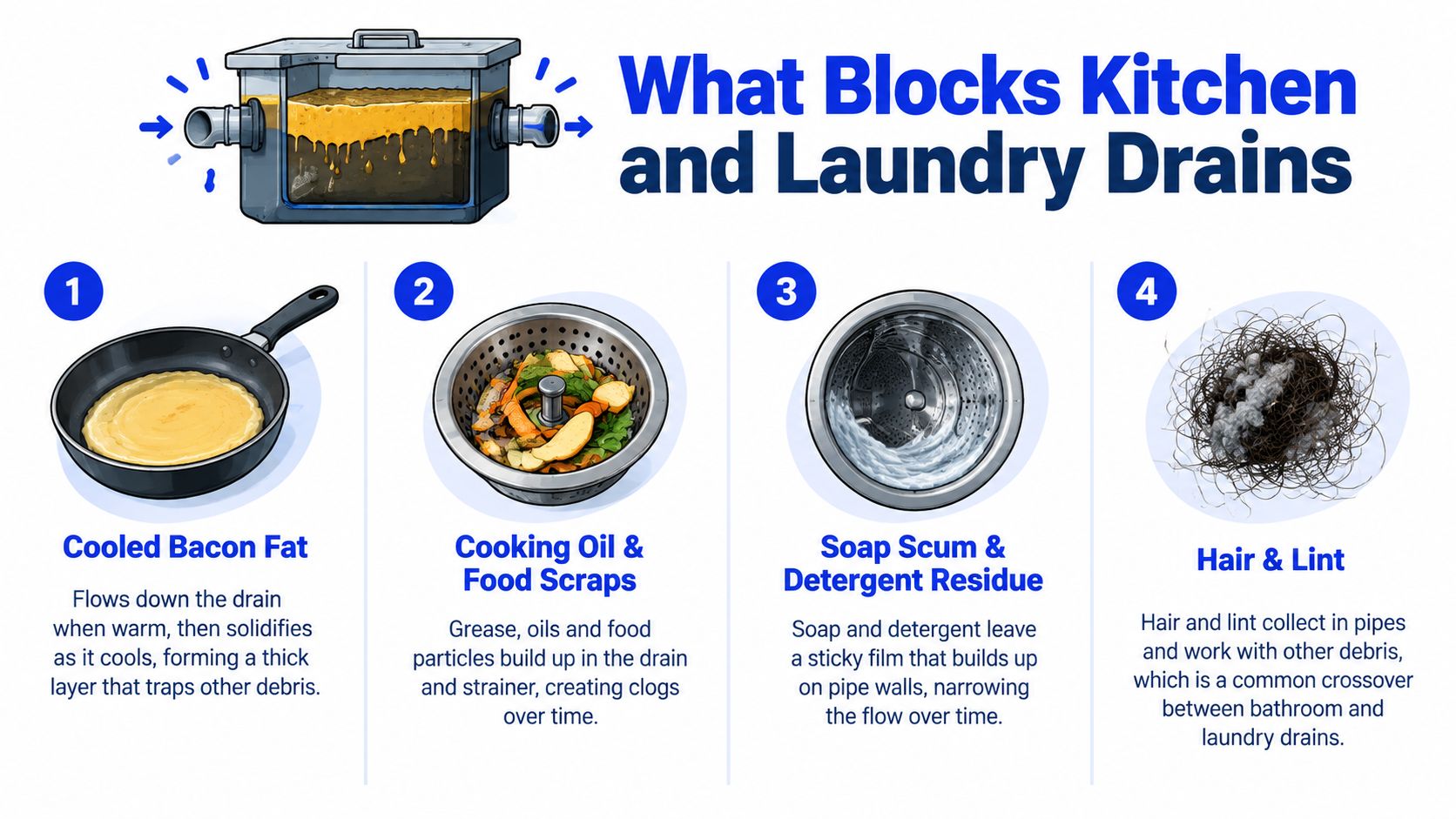
Kitchen blockages usually build gradually rather than arriving as one dramatic object. Warm cooking fat looks harmless as it leaves a pan, but it cools against the inside of the pipe and forms a sticky coating. Cooled bacon fat behaves like pipe plaque, reducing the usable opening and giving food particles something to cling to.
Food scraps add weight to that coating. Rice and pasta can swell into a starchy mass, while vegetable peelings and crumbs settle wherever the flow slows. Coffee grounds are particularly troublesome because they sink into the U-trap and collect with other residue instead of moving cleanly through the line.
The kitchen materials that create a stubborn plug
Dishwashing detergent doesn't make grease disappear. It may disperse some fat while the water is hot, but the mixture can later cool and leave a hardened, sticky residue. That grease-and-debris material is part of the same buildup often described as fatberg material, especially where repeated washing sends small amounts down the sink.
Use a simple routine:
- Scrape first: Put plate scraps into the bin before rinsing.
- Wipe pans: Remove cooking fat with a paper towel and place it in the bin.
- Catch solids: Fit a fine mesh strainer over the sink basket.
- Keep grounds out: Empty coffee grounds into the bin or compost rather than the sink.
- Handle dirty water carefully: Don't tip a pan full of greasy washing-up water straight down the drain.
Laundry pipes have their own mix. Lint, pet hair, washing sheets and loose fibres can reach a floor waste or standpipe, particularly where the discharge hose isn't secured correctly. A lost sock won't normally travel far, but it can obstruct a grate or combine with lint and soap residue at the entry point.
Older clay and galvanised pipework can become rough internally as it ages. That roughness gives grease and fibres more places to catch, so the same household habit may cause fewer problems in newer, smoother pipework than it does in an older Melbourne property.
What Blocks Bathroom Shower, Basin and Toilet Drains
The shower drain is a small filter whether you've installed a screen or not. Hair catches on soap residue, conditioner and skin oils, creating a fibrous mat inside the grate or trap. Each shower adds more strands and residue, and the mat eventually slows the water enough for soap to build around it.
Remove visible hair regularly instead of waiting for the water to pool. A removable hair catcher works because it stops the material before it enters the trap. If you're cleaning the trap, use gloves and a tool designed for drain hair rather than forcing a sharp object down the pipe.
Basins collect more than water
Basin waste pipes receive toothpaste, beard trimmings, cosmetic residue and occasionally jewellery. A small object can lodge in the stopper mechanism, while a thin slime layer gradually narrows the bore around it. The blockage may look like a plumbing failure, but the cause is often sitting directly beneath the plug or in the trap.
Take the stopper out and clean the visible opening first. If the basin remains slow, a bucket under the trap and a controlled clean may help, provided the fittings are accessible and you're confident you can reseal them without overtightening.
Toilets aren't general waste bins
Toilet paper is designed to disperse in water. Wipes, cotton buds, dental floss and sanitary products aren't equivalent, even when a packet uses the word “flushable”. Wipes can remain intact, catch on the internal bend of the toilet trap and combine with other material further along the sewer.
The same applies to absorbent products and thick paper. They swell or retain their shape, which makes them more likely to bridge across a restricted section. Keep a lined bathroom bin beside the pan and use the simple rule that only toilet paper and human waste belong in the toilet.
A local toilet obstruction often affects that toilet alone. If plunging the toilet makes the shower drain gurgle, water moves in the wrong place because the restriction is beyond the fixture. Stop flushing and arrange professional clearing rather than forcing more water into a shared line.
Outdoor Sewer and Stormwater Blockages Explained
Outdoor drainage problems need a different diagnosis from a slow basin. A private sewer branch runs from the home towards the property boundary, where it connects with the public sewer network. The council or water authority manages the downstream main, but the property owner generally deals with private plumbing and the private drain leading to the connection point.
That boundary isn't always visible from the surface. A plumber may need to locate an inspection opening, test flow from several fixtures and inspect the pipe internally before anyone can say which asset is blocked. In Victoria, council information also separates public-land drains, kerb and channel issues from private drains, so reporting the wrong asset can delay the right response.
Why mature trees cause repeat sewer trouble
Tree roots don't need a large opening to start a problem. Fine feeder roots can exploit a hairline defect, joint or damaged connection, then grow into the pipe where moisture and nutrients are available. As the root mass expands, it catches paper and solids and creates a recurring obstruction.
Established suburbs with mature trees are especially exposed. SA Water recorded 3,275 sewer main blockages caused by tree roots in 2024–25, up from 2,352 the previous year, and said roots accounted for nearly two-thirds of 5,132 statewide sewer main blockages in that period, as reported in its sewer blockage update. That South Australian data isn't a direct count of Melbourne homes, but it demonstrates why tree-root intrusion deserves serious consideration when an older, tree-lined property has repeat sewer blockages.
Stormwater has a different set of offenders. During heavy rain, leaves, sand, dirt, rubbish, debris and roots can obstruct grates, pits and pipes. Builder's rubble can enter unfinished or poorly protected drainage, while soil movement can leave a pipe sagged or misaligned. Melbourne's west also includes areas where changing soil moisture can affect buried services, so a pipe that repeatedly holds water may need inspection rather than another surface clean.
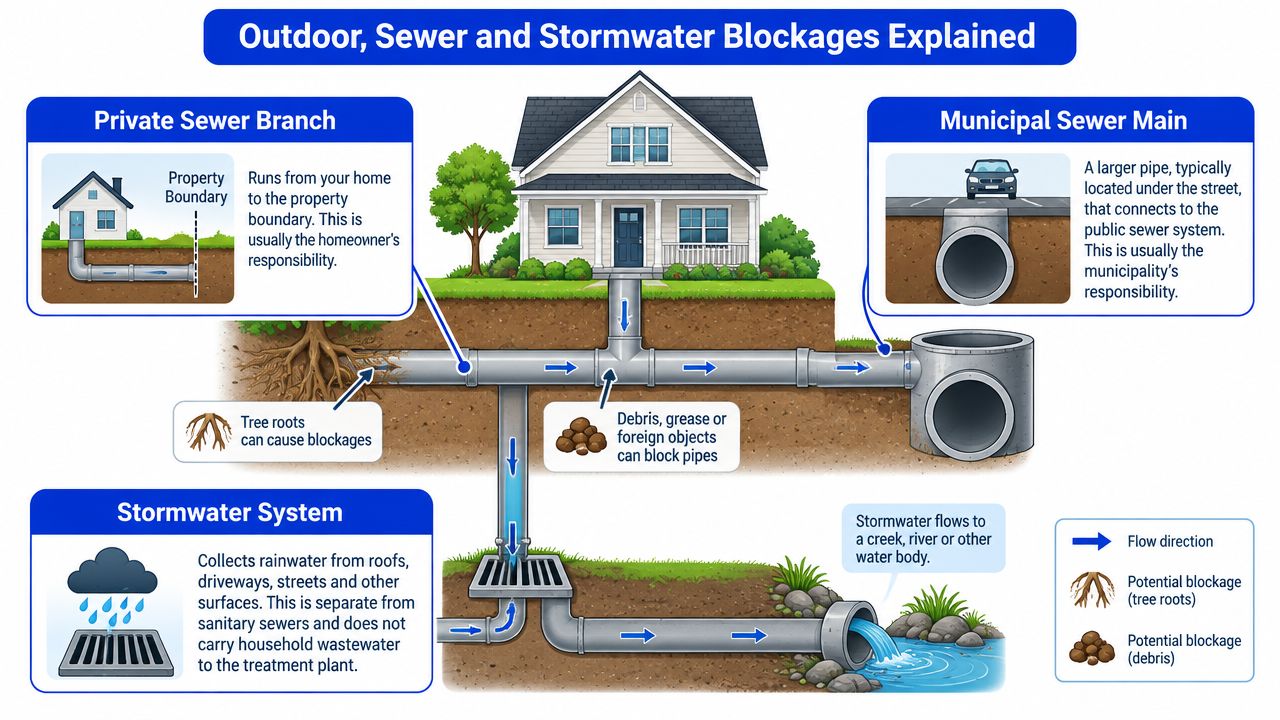
A blocked stormwater pit in a Yarraville or Werribee laneway may point to leaves, silt or street-tree roots in the public system rather than a private toilet or kitchen fault. Don't excavate on that assumption. A CCTV drain survey can show whether the pipe is obstructed, cracked, displaced or full of debris before digging begins.
Warning Signs and Immediate Checks You Can Safely Do
Early signs tell you more than a completely flooded drain. Listen when the washing machine empties. A gurgle from the laundry floor waste means air and water are competing for space in the pipe, which may indicate a restriction downstream.
Watch what happens across the home, not just at one fixture. Flush the toilet while someone observes the shower, basin and floor wastes. If water rises in a low drain or several fixtures respond together, stop using high-discharge appliances until the line has been assessed.
Match the sign to a sensible check
- Gurgling during discharge: Run a small amount of water through the basin and listen at nearby wastes.
- Slow draining water: Remove the visible grate or plug and clear hair or surface debris without pushing it further into the pipe.
- Unpleasant odours: Check whether the smell comes from a dry floor-waste trap, trapped residue or an outdoor pit after rain.
- Water backing up: Start with the lowest visible drain and stop flushing or running appliances if wastewater is rising.
- Pooling at an outdoor grate: Lift the grate carefully and look for leaves, silt or rubbish, provided the cover is safe to handle.
- A damp or unusually green lawn patch: Treat it as a possible underground leak or drain defect rather than assuming it's just irrigation.
A garden tap can help you observe whether a stormwater pit accepts water, but don't flood the area while testing. Keep clear of electrical equipment, contaminated water and unstable covers. If you're concerned about moisture entering walls, ceilings or floors, arrange water leak detection and repair rather than relying on surface drying.
Avoid caustic soda as a first response. Chemical cleaners can leave hazardous liquid in the pipe, damage fittings and complicate a plumber's work. A coat hanger can scratch or crack brittle pipework, and forceful plunging can push a soft obstruction deeper or move contaminated water into another fixture.
Simple Habits That Prevent Blocked Drains
Prevention works best as a set of small routines. You don't need to redesign the house before dealing with the material that enters each drain.
Kitchen and laundry
Scrape plates into the bin before rinsing. Wipe greasy pans with a paper towel, collect cooled cooking fat in a container for the bin and keep a fine mesh strainer in the sink. These steps stop the main ingredients of kitchen buildup before hot water and detergent can carry them into the pipe.
Laundry waste needs a similar barrier. Fit a lint sock to the washing machine discharge hose, secure the hose so it can't move into the floor waste and use detergent according to the product instructions. Excess detergent can leave residue, while loose lint and pet hair can collect at the outlet.
Bathroom habits that pay off
Fit a hair catcher to the shower drain and empty it after use. Keep wipes, cotton buds, floss and sanitary products in a bathroom bin, regardless of packaging claims. The only material that should routinely be flushed is the familiar three-part rule, toilet paper, pee and poo.
Don't use chemical drain cleaner as a maintenance habit. It may seem faster than removing hair from a screen, but it doesn't correct a damaged pipe, root intrusion or a sagged section.
Outdoor checks
Clear leaves from stormwater grates and downpipes after heavy rain. Leaf guards can reduce the amount of roof debris entering downpipes, but they still need cleaning because a covered guard can become a blocked filter. If a property has a known root problem, discuss root management and inspection with a plumber before cutting roots or planting near the sewer alignment.
Jet cleaning can remove accumulated debris from suitable pipework, but it isn't a permanent repair for a cracked pipe or invading roots. The useful question is not only whether water flows today, but why the blockage formed.
A short visual reminder can help households keep these routines consistent.
Risks of Waiting Too Long and When to Call a Licensed Plumber
A slow drain isn't harmless just because the water still disappears. Standing water can leave persistent moisture around floors, cabinetry and subfloor areas, while wastewater backing up can stain surfaces and spread contamination. Damp building materials may support mould growth, attract pests and contribute to timber deterioration if the leak continues unnoticed.
Outdoor leaks create a different pattern. A damaged sewer joint can let roots enter, while a displaced or cracked section can allow soil into the pipe. A sagged pipe may keep holding solids even after a clearing temporarily restores flow. Repeating the same surface treatment without identifying the defect only resets the countdown to the next blockage.
Insurance can also become complicated when damage follows a long period of neglect. Policies differ, but some exclude gradual leaks, wear or deferred maintenance, so keep records of warning signs, inspections and repairs instead of waiting until wastewater has damaged the property.
Call for professional help when the pattern changes
Arrange a licensed Victorian plumber when:
- Several fixtures back up together: The restriction may be in a shared private sewer line.
- The laundry floor waste gurgles: Appliance discharge may be meeting resistance downstream.
- Water pools beside the house after rain: The fault may sit in stormwater, underground drainage or a connection point.
- You see or smell sewage: Stop using affected fixtures and keep people and pets away from contaminated water.
- The blockage returns soon after clearing: Roots, pipe damage, poor fall or a recurring buildup needs investigation.
A proper service may include mechanical clearing, water jetting where appropriate and CCTV inspection. The camera matters when the blockage keeps returning because it can reveal roots, cracks, displaced joints, rubble or a collapsed section without immediately excavating the garden or path.
For homes in Caroline Springs, Taylors Hill and Melbourne's western suburbs, Total Plumbing & Hot Water Systems' blocked drains service can address the obstruction and investigate the reason it formed. Ask for a clear explanation of whether the blockage is in private plumbing, the sewer branch or stormwater, along with the recommended method and written pricing before invasive work begins.
Total Plumbing & Hot Water Systems provides blocked drain clearing, CCTV-based diagnosis, leak repairs and emergency plumbing support across Melbourne's western suburbs. If your sink is slowing, several fixtures are gurgling or stormwater is pooling after rain, visit Total Plumbing & Hot Water Systems to request practical advice, scheduling and a clear quote.